Updated: September 3, 2026
|
8 min read
Updated: September 3, 2026
|
8 min read
Pop Traffic for Giveaway Offers: A Testing Framework

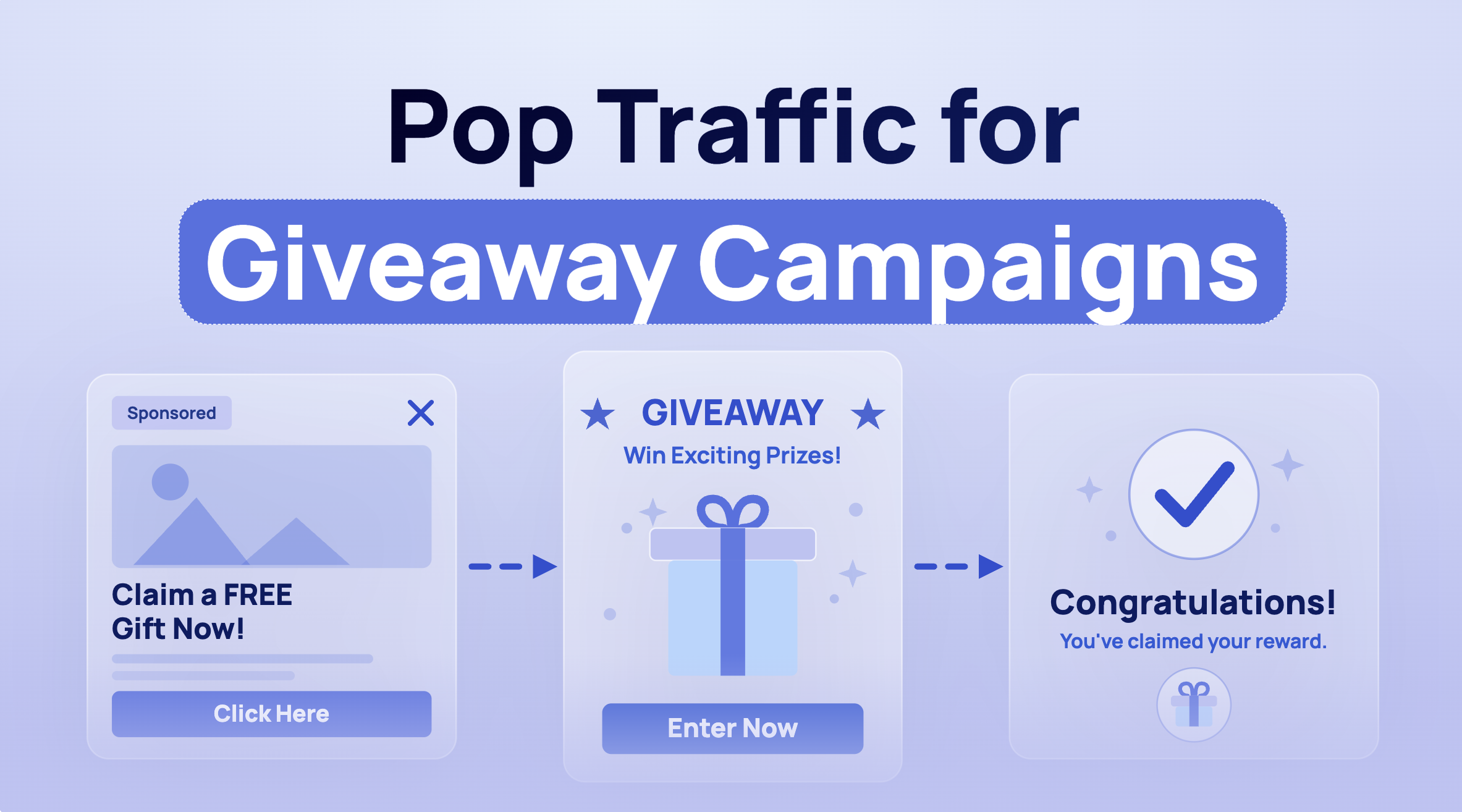
A payout can look profitable at launch and still lose money after the first scrub. The real question with pop traffic giveaway campaigns is whether approved revenue survives the full path from impression to confirmation, cap, and reversal.
Does pop traffic work for giveaway offers?
Pop traffic works for giveaway offers when the offer permits it, the GEO economics leave enough room between CPM and approved payout, the cap is open, and lead quality holds after review.
Giveaways have mass appeal and usually ask for an impulse action: entering for a chance to win. That fits popunder traffic well, where broad volume often matters more than narrow demographic intent.
SOI (single opt-in) and DOI (double opt-in) lead flows usually fit Tier-2 and Tier-3 GEOs because their lower payouts require cheaper impressions. Payouts in the $1–$10 per conversion range are often where pop economics start to make sense.
CC-submit offers sit at the other end of the spectrum. In these flows, the user enters card details, usually for a shipping fee or trial. Payouts are much higher, but campaigns are concentrated in Tier-1 card markets and face tighter quality reviews, longer confirmation cycles, and potential chargebacks.
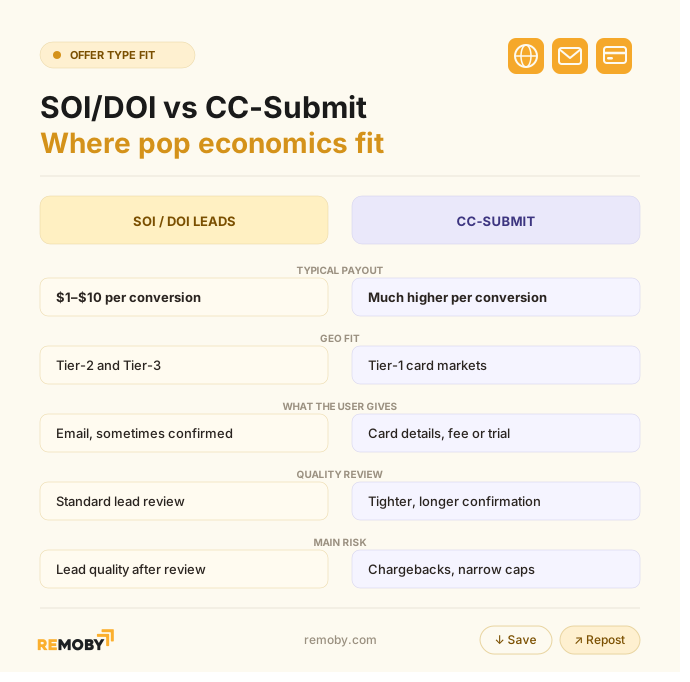
Remoby fits the CPA-first Tier-2 and Tier-3 side of this equation because its pop inventory is built around direct publisher relationships across these GEOs.
What offer requirements should you verify before buying pop traffic?
Offer requirements determine whether a click can ultimately become paid revenue.
Before launch, confirm:
- allowed traffic sources;
- prohibited incentive or co-registration methods;
- eligible GEOs;
- device and OS rules;
- carrier requirements;
- conversion event;
- payout;
- hold period;
- clawback conditions;
- cap behavior;
- advertiser timezone and cap reset time.
Also ask whether the cap is hard or soft. A hard cap stops accepting conversions once the limit is reached. A soft cap may continue accepting leads but hold overflow traffic for review, which can look like a sudden scrub from the buyer’s side.
Verify these terms when evaluating offers through a CPA affiliate network: approved claims and creatives, whether mainstream pop is permitted, named GEOs, OS rules, carrier eligibility, and the exact event that earns the payout.
A typical offer may allow pop traffic while prohibiting incentives and co-registration, for example, while separately rejecting ineligible carriers.
| Flow | Payout level | Approval pressure | Suitable GEO economics | Feedback speed | Reversal risk |
|---|---|---|---|---|---|
| SOI | Lowest | Lower, though duplicates can still be scrubbed | Tier-2/3 cheap inventory | Fast | Lower |
| DOI | Higher than SOI | Confirmation rate is critical | Tier-2/3 when CPM stays controlled | Delayed by email confirmation | Moderate |
| CC-submit | Much higher | Strict expectation and payment-quality review | Mostly Tier-1 | Longer confirmation cycle | High, including chargebacks |
DOI confirmation rate is one of the clearest indicators of lead quality.
CC-submit, meanwhile, is not simply SOI with a larger payout. It has a different payback window because refunded card events may become clawbacks, reversing revenue that initially appeared confirmed.
Match payout to traffic cost, optimize against approved leads rather than gross submits, isolate GEO economics by flow type, and wait for the actual conversion event before scaling CC-submit campaigns.
When is a prelander better than direct linking?
A prelander is an intermediate page between the pop and the offer form.
A prelander is often better than direct linking when cold popunder visitors need additional context before reaching the form. Prize quizzes, short question flows, and spin-style interactions can create small user commitments before the visitor reaches the final entry page.
Direct linking should still be tested as a control when the offer page already explains the flow clearly.
The funnel typically looks like this:
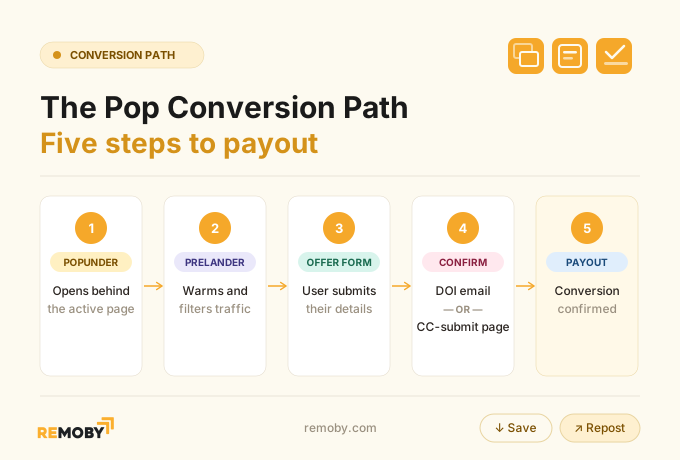
The prelander is not just decoration.
In one of my examples, a static page reached an LP CTR of around 14%, while interactive mechanics reached roughly 25–40% because users had already interacted with the flow before clicking through.
These figures should not be treated as universal benchmarks. More importantly, a higher LP CTR only matters if downstream approval rates remain healthy.
Tracking starts with the Click ID. You should also retain:
- placement ID;
- campaign;
- GEO;
- device and OS;
- carrier, where relevant;
- prelander variant;
- offer ID;
- conversion status;
- postback-event time.
One possible tracking structure uses:
sub1— placement;sub2— campaign;sub3— GEO;sub4— device/OS;sub5— prelander variant;sub6— offer ID;
with Click ID passed separately.
Parameter naming varies by tracker, so confirm the exact fields in Voluum, Binom, RedTrack, Keitaro, or your own tracking stack before launch.
Carrier-billed giveaway flows also exist, but they are outside the scope of this article. When eligibility depends on carrier, however, carrier should be stored as its own tracking dimension.
Prelander variant is one of the fields buyers most often forget. Without it, you may know which placement converted but not which angle generated the conversion inside that placement.
Send submits and confirmations as separate postbacks whenever the affiliate program supports it. For implementation details, see our guide to affiliate tracking software.
How do CPM, LP CTR, offer conversion rate, and payout set a profitable bid?
Profitability starts with approved revenue per visit, so use this equation:
Revenue per visit = LP CTR × offer conversion rate × approved-lead rate × payout
Then:
Break-even CPM = 1,000 × revenue per visit
Net ROI = (approved revenue − spend) / spend
eCPA = spend / approved conversions
These formulas are not benchmarks. They are a framework for evaluating your own funnel.
Consider an illustrative Brazil Android-only campaign:
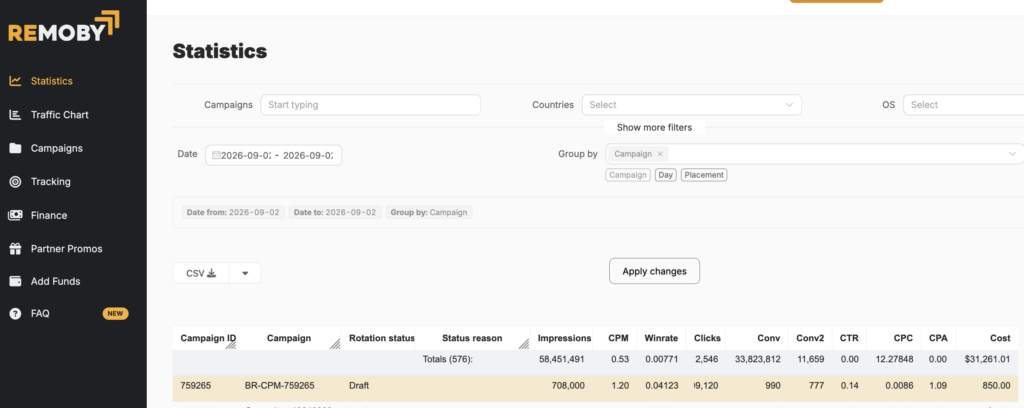
- Spend: $850
- CPM: $1.20
- Impressions: 708,000
- Static prelander LP CTR: 14%
- Offer conversion rate: 1.0%
- Payout: $1.40
- Gross leads: 990
- Gross revenue: $1,386
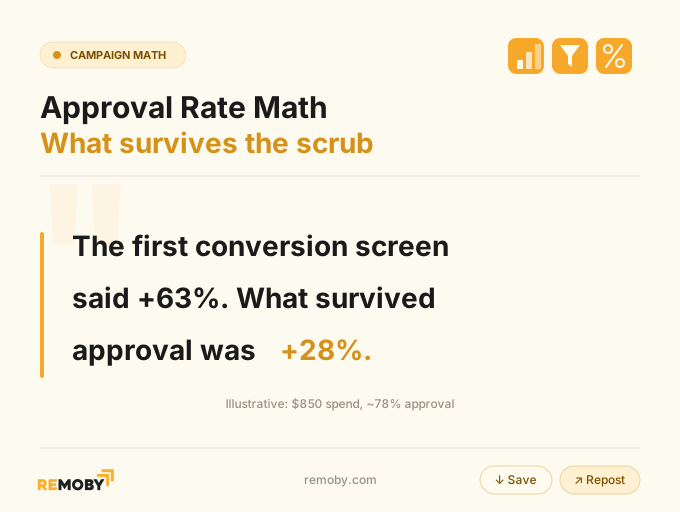
On submitted leads alone, gross ROI appears to be approximately +63%.
After duplicate and invalid-lead rejections, however, the same illustrative campaign produces roughly +28% net ROI.
That difference is exactly why scaling decisions should not be based on the first conversion screen.
Gross ROI can materially overstate the economics that survive advertiser approval.
Use your expected approval rate when setting the maximum bid. A 60–80% approval assumption may sometimes be used as an initial planning range for lead-generation offers, but it should never be treated as a guarantee.
The break-even CPM tells you what you can afford to pay. The cap tells you whether you can continue buying at that price.
How do you launch a profitable pop traffic giveaway campaign?
A disciplined launch isolates one GEO and device segment, verifies the payout event and cap, sends Click-ID-based postbacks, and waits for enough placement-level data before judging profitability.
Start with separate budgets by GEO and device or OS. Split eligible carriers where required and possible, retain placement-level reporting, and compare approved revenue rather than blended gross conversions.
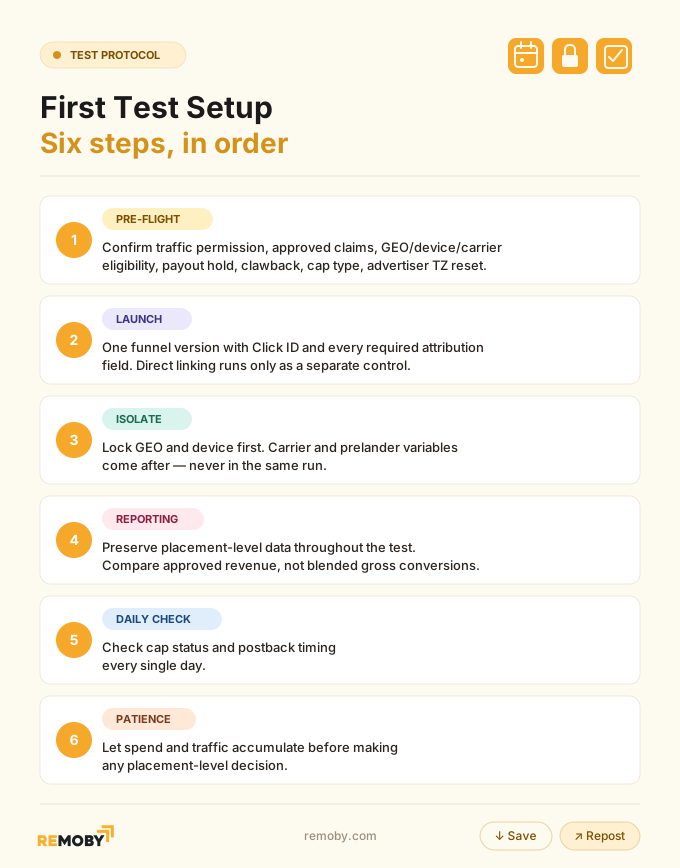
Run the first test in this order:
- Confirm traffic permission, approved claims, GEO/device/carrier eligibility, payout hold, clawback rules, cap type, and advertiser-timezone reset.
- Launch one funnel version with Click ID and all required attribution fields. Test direct linking only as a separate control.
- Isolate GEO and device before introducing carrier or prelander variables.
- Preserve placement-level data throughout the test.
- Check cap status and postback timing daily.
- Allow enough spend and traffic to accumulate before making placement-level decisions.
As a practical operating rule, some buyers wait for approximately 1,000 visits per placement and up to 2× target eCPA in spend before making a negative decision. This is a working threshold rather than a statistical standard and should be adjusted for payout, conversion rate, and expected variance.
SOI usually provides the fastest feedback once enough traffic is available. DOI submits can make a placement look stronger before confirmations arrive. CC-submit requires the longest evaluation window because early revenue may still sit inside a refund or chargeback period.
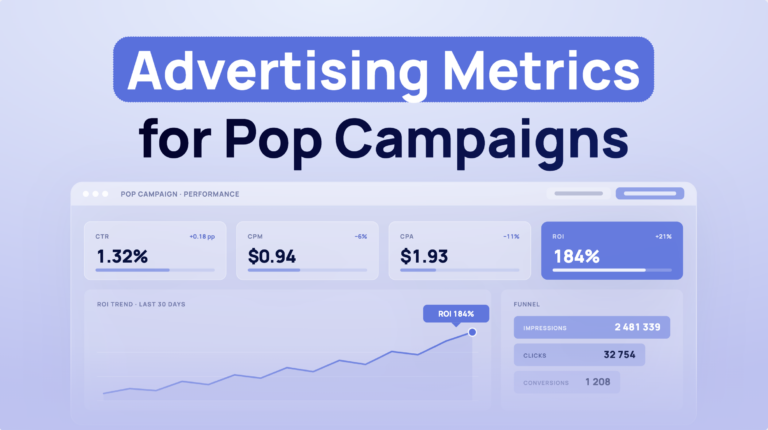
Read our guide to pop campaign metrics before changing bids based on a handful of conversions. For test sizing, see our guide to budget allocation in pop traffic.
Which metrics determine whether to scale or blacklist a placement?
Placement decisions should consider several metrics together:
- approved-lead rate;
- eCPA;
- net ROI;
- cap status;
- postback delay.
As an example operating framework:
- Whitelist: 10+ approved conversions at or below target eCPA across three days.
- Blacklist: zero conversions after spending 2× target eCPA.
- Quality blacklist: 10+ gross conversions with an approved-lead rate below 50%.
- Scale: net ROI above 25% for three days with stable approval rates.
These are operating rules, not industry constants. Adjust them for payout size, conversion volume, variance, and available cap.
Ten conversions is deliberately stricter than three because gross leads can still be scrubbed. A placement showing three submitted conversions might ultimately leave only one approved lead, which is not enough evidence that its economics are repeatable.
Protect approval rate before trying to widen volume:
- Use chance-framed pages that match the offer: “Enter for a chance to win,” not “You won.”
- Run only approved advertising claims and creatives.
- Avoid fake winner announcements, deceptive countdown timers, or third-party products presented as guaranteed prizes.
- Keep frequency caps controlled and maintain clean placement hygiene.
- Do not use incentivized entries unless the offer explicitly permits them.
- Check applicable disclosure, consent, eligibility, and traffic-source requirements.
“You won” is a materially different claim from “you have a chance to win.” Misleading prelanders can produce rejected leads, reduced caps, offer removal, or traffic-source enforcement. In CC-submit campaigns, mismatched expectations can also increase refund and chargeback rates.
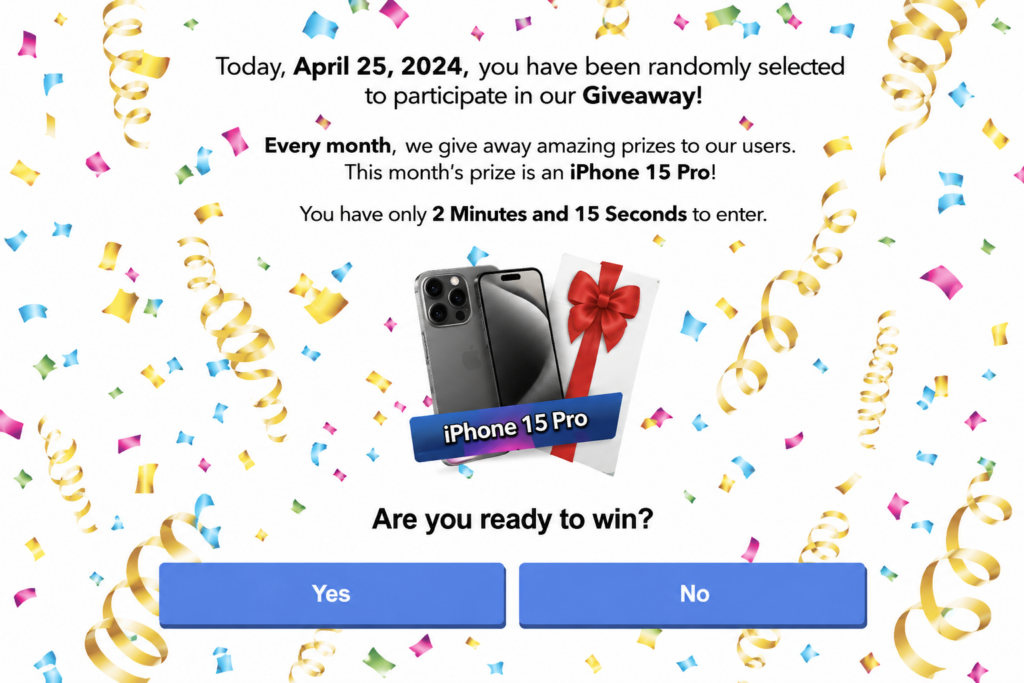
Follow the offer owner’s approved creatives and claims rather than inventing prize brands or conditions.
User-level deduplication can also matter when rotating similar giveaway offers because audiences overlap. Repeat users may cost money again while returning as rejected duplicates.
Lower frequency caps can reduce audience fatigue. See our guide to frequency capping for pop ads.
FAQ for Giveaway offer affiliates
Paid traffic is worth it when approved revenue, rather than reported submits, exceeds traffic cost after holds, scrubs, and the test budget. A buyer also needs enough cap capacity and cash tolerance to wait through the flow's confirmation window. A positive first-day dashboard isn't sufficient for DOI or CC-submit.
Pop-up advertising remains active, though pop-under inventory is the more relevant format for giveaway campaigns. A pop-under preserves the active browsing page and can deliver broad volume. Treat each placement as its own economic unit, because the same CPM can produce very different approval rates.
Pop-up ad examples include a browser window opening over content, a pop-under opening behind the active tab, back-button traffic opening after a user returns, and an interstitial-style browser page. For giveaway offers, the useful question is whether the traffic source permits the flow and passes placement ID into reporting.