Updated: July 28, 2026
|
9 min read
Updated: July 28, 2026
|
9 min read
Best Affiliate Tracking Software 2026: Paid SaaS, Free, and Self-Hosted Compared

The tracker looked cheap. Then volume hit, postbacks got messy, blacklist management no longer helps, and the monthly bill stopped being the problem. That’s the real question behind best affiliate tracking software in 2026: do you want fast setup now, or tracking you still trust when clicks and edge cases pile up?
What is the best affiliate tracking software in 2026?
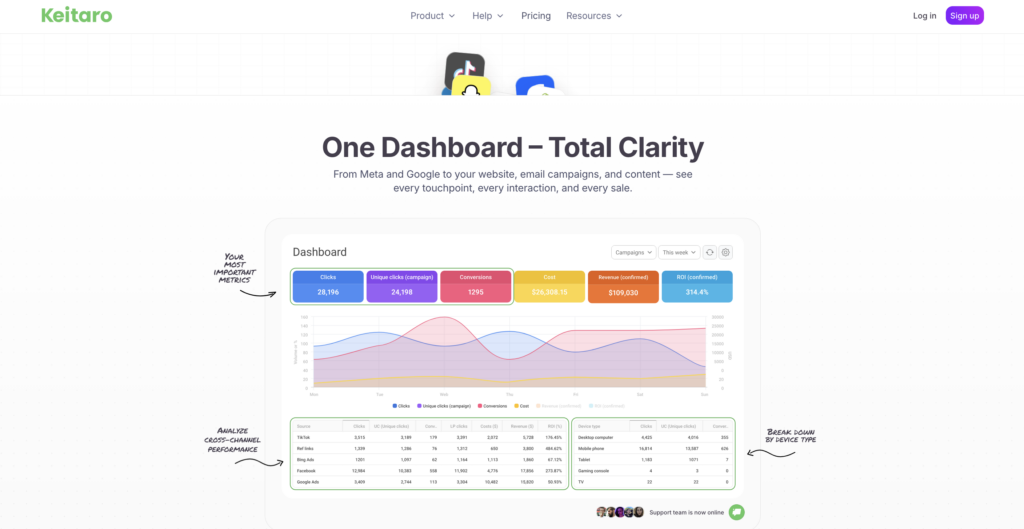
Affiliate tracking software in 2026 is best chosen by buyer type, not by one winner. Trackdesk and Everflow are strong paid SaaS options for teams that want reliable tracking with low technical overhead. Binom and Keitaro fit smaller budgets. Voluum makes more sense for technical teams that care about fixed infrastructure cost and full postback control at scale, even though the pricing leans towards a higher threshold.
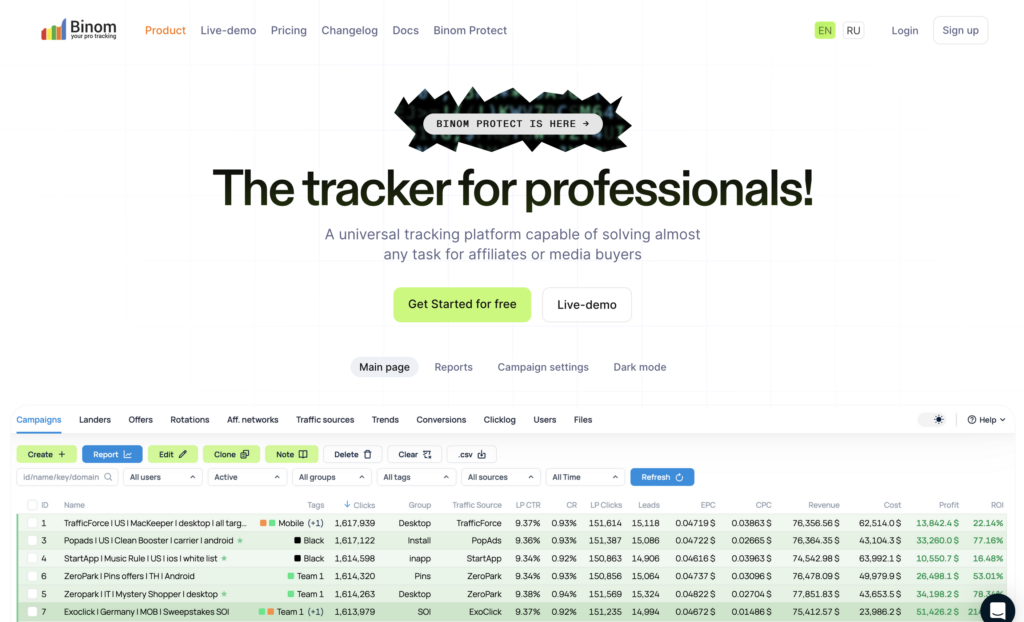
That split matters more than the logo on the pricing page. I’ve seen buyers compare five tools by dashboard screenshots, then ignore the thing that bites later: how the tracker handles S2S tracking, token mapping, and cost once volume stops being cute.
The easy choice on day one is often the expensive one by month six.
What counts as affiliate tracking software for media buyers
Affiliate tracking software for media buyers is the measurement layer for clicks, conversions, attribution rules, commissions, and partner reporting. Tools belong in this comparison if tracking is the core job. Affiliate networks, broader partner platforms, and referral tools should be excluded when they mainly supply partners or run relationship workflows rather than act as a dedicated tracking stack.
Here’s the clean cut I wish more roundups made.
- Include: dedicated trackers such as Trackdesk, Everflow, Voluum, Binom, Keitaro
- Exclude: affiliate networks like Impact when evaluated mainly for partner supply, not pure tracking
- Exclude: referral-first SaaS like Tolt or PartnerStack when the main job is SaaS partner workflow, not raw media-buying style attribution
The pattern I’ve seen is simple. Confusion comes from bundled products. A partner platform can have tracking. That does not make it comparable to a tracker built around postback logic, redirect chains, and sub ID depth.
How that tracking layer works end to end – read in the affiliate tracking software blog.
Once you clean the category up, the harder choice shows up fast: hosted convenience or owned infrastructure.
Paid vs free vs open-source affiliate tracking software: what is the difference?
Paid SaaS affiliate tracking software is vendor-hosted, billed monthly, and built for speed to launch with support and managed infrastructure. Free affiliate tracking software usually means a limited plan with caps on affiliates, products, or events. Open-source or self-hosted tracking software gives more control over data and server setup, but maintenance, SSL, scaling, and postback configuration sit with your team.
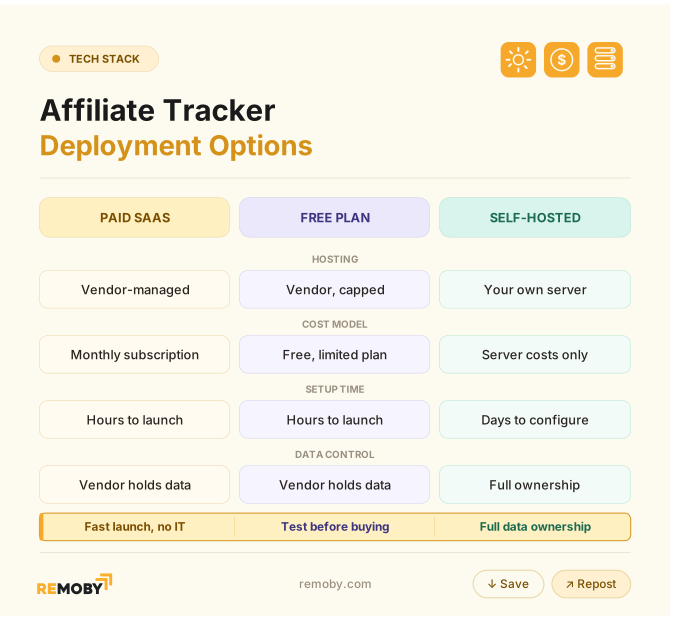
This is where people overcomplicate it. The feature checklist is not the first decision. The deployment model is. If you have no DevOps support, self-hosting is a bad idea. Full stop. If you already manage VPS boxes, SSL, and DB scaling, a fixed-cost setup can beat SaaS once click volume climbs.
How we evaluated affiliate tracking software
A $99 plan can turn into a $2,000 line item if you never model volume crossover. That was one of the clearest warnings from the expert input used in this review.
Scoring was built around five things:
- Tracking reliability: S2S postback support, click ID handling, first-party fallback, coupon attribution
- Technical burden: how much engineering is needed to get postback, offer URL mapping, and payout logic working cleanly
- Cost curve: starting price plus what happens at 2-3x current volume
- Control: data ownership, hosting control, exportability
- Fit: SaaS startup, ecommerce brand, or agency/media-buying workflow
Cheap setup and cheap ownership are not the same thing.
I learned this one the annoying way. A tracker can look “done” after install while the postback still breaks on one macro, one coupon rule, or one redirect hop. Is this a tracking issue or a funnel issue? Did the sub ID pass? Is Safari eating part of the story?
Best paid SaaS affiliate tracking software for low technical overhead
Low-overhead SaaS affiliate tracking software is best for teams that want vendor-hosted infrastructure, support, and faster setup without running their own servers. Trackdesk is a strong fit for teams that want broad tracking methods and a more accessible pricing ladder. Voluum suits larger programs that need mature integrations and ecommerce depth. Keitaro and Binom work well for smaller budgets with public entry pricing.
Three names stand out here.
- Binom: commonly cited from $104 to $299 per month, a better fit when an affiliate works alone and wants to save up while payouts are still low.
- Voluum: public plans starting at $99 per month and rising to $7,999 on its top tier, good for bigger affiliates and advertisers who are eager for advanced features.
- Trackdesk: public pricing from $329 to $1,199 per month, with S2S postback, pixel, and click ID support on its product materials.
Fast setup is nice. The catch is that browser-proof attribution is where the shortlist starts shrinking.
Best free and open-source or self-hosted affiliate tracking software
Self-hosted affiliate tracking software is the better choice when data ownership and fixed infrastructure cost matter more than convenience. Binom and Keitaro are the serious options most technical performance teams actually run, even though they are not true open-source tools. Voluum is relevant for eCom programs. Free plans exist, but serious free and fully open-source choices are thin in 2026.
That part disappoints people every year. They search “open-source affiliate tracker” and expect a clean shortlist. What they mostly find is half-built software, old repos, or referral tools wearing a tracker costume.
The expert view here matched what I see around media-buying teams: reliability at volume beats zero license cost. Binom and Keitaro keep showing up because they give full postback control and fixed server economics. For a technical agency running traffic splits across multiple landers, that matters more than marketing copy.
Avoid self-hosted if you cannot provision a VPS, manage SSL, scale a database, and debug token mapping (this is usually where the “we’ll figure it out” plan breaks).
Affiliate tracking software comparison table
Mixing unlike tools here makes the whole table useless. So this keeps tracking-first products together and flags workflow differences. Annual pricing shown; promo prices where active, regular prices in parentheses.
| Tracker | Plan | Price/mo | Events/traffic | Campaigns/offers | Other |
|---|---|---|---|---|---|
| Voluum | Profit | $99 ($119) | 1M events | 40 camp. / 40 off. / 20 land. | 10 traffic sources, overage $0.06/1K |
| Scale | $239 ($299) | 5M events | 100 / 100 / 30 | 30 sources, overage $0.05/1K | |
| Start-up | $439 ($539) | 10M events | 200 / 200 / 50 | 50 sources, overage $0.05/1K | |
| Binom | Binom v2 | $104 | up to 260M/day | — | Lifetime retention, extra license $52 |
| Binom Cloud | $299 | up to 2M/day | — | Auto-install, extra license $149 | |
| Binom Protect | $69 | Unlimited clicks | — | Bot/VPN/fraud protection, 1 license for all trackers | |
| Trackdesk | Business | $329 | Unlimited clicks/conv. | 10 offers / 100 coupons | Program revenue up to $30K/mo, 900+ integrations |
| Enterprise | $499 | Unlimited | Unlimited | Tiered, 1000+ integrations + full API | |
| Enterprise PLUS | from $1,199 | Unlimited | Unlimited | Custom, Google-certified domain | |
| RedTrack | Builder | $69 ($79) | 2M events | Unlimited | 5 ad accounts, 6h sync, overage $0.04/1K |
| Human Team | $333 ($399) | 20M events | Unlimited | Unlimited ad accounts, 30-min sync | |
| AI Team | $349 ($499) | 20M events | Unlimited | 30-min sync, MCP server | |
| Enterprise | $833 ($999) | 75M events | Unlimited | 30-min sync, overage $0.025/1K | |
| Keitaro | Starter | €40 | No limit (own server) | — | Basic features, online support |
| Advanced | €72 | No limit | — | + Click API, advanced scripts, FB integration | |
| Expert | €104 | No limit | — | + Flows monitoring, Admin API, Google/TikTok, onboarding call |
Keep in mind that these prices are accurate at the date of publication and can be used for general overview. We recommend connecting to the trackers directly for the current pricing list.
Which features matter most for reliable affiliate tracking under browser restrictions?
Reliable affiliate tracking features in 2026 start with server-to-server postbacks using click IDs stored and matched outside the browser. First-party cookie support is the next layer, not the first one. Coupon attribution and direct-link fallback matter for ecommerce edge cases. Setup complexity matters because a tracker with “S2S support” on the site can still fail if macros, postback URLs, or click ID passing are sloppy.
WebKit’s Intelligent Tracking Prevention keeps cutting browser-based certainty, and broader Privacy Sandbox changes keep pushing teams away from cookie dependence. That is why the expert line is usualy hard-edged: “S2S with click IDs matched server-side is the only config I trust; cookies are a fallback.”
Why S2S survives where pixels fail: how server-side tracking works.
If your funnel runs on push, pop traffic, or display traffic, this is already familiar. The postback URL setup either maps cleanly or it doesn’t. Same logic here.
What actually breaks affiliate tracking in 2026
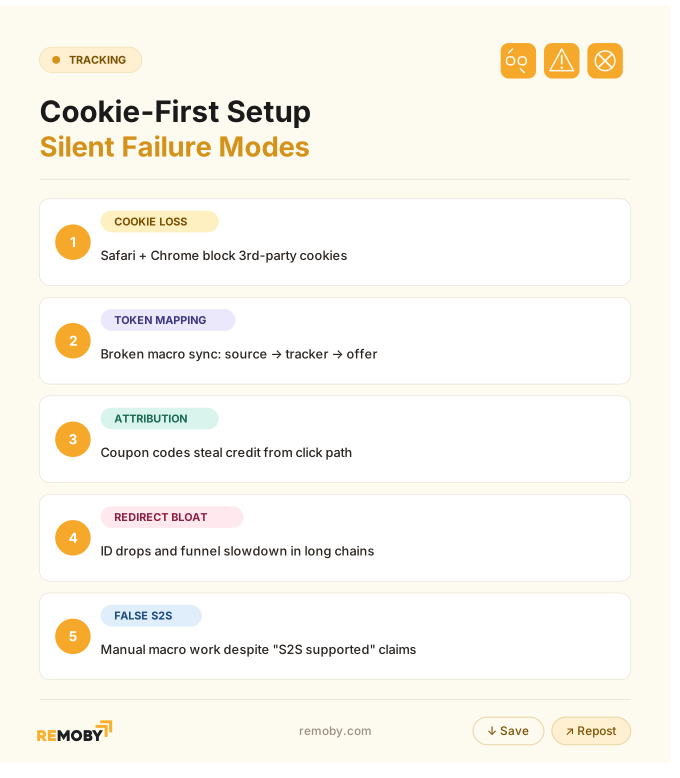
Cookie-first setups break quietly. That’s what makes them dangerous.
The common failure modes are not exotic:
I’ve burned hours blaming a weak funnel when the real issue was one bad postback parameter. Not a broken campaign. One broken handoff (annoying, and more common than people admit).
Remoby or PropellerAds traffic won’t save a campaign if the tracker loses sub IDs on the handoff. Clean traffic plus broken attribution is still broken.
And even when the tracking works, cost can still punish the wrong choice.
How much does affiliate tracking software really cost beyond the monthly plan?
Affiliate tracking software cost goes beyond the sticker price in three places: volume-based overages, implementation effort, and maintenance. Paid SaaS looks cheap early because hosting and support are bundled. Self-hosted looks cheaper later because server costs stay relatively fixed while SaaS event pricing climbs. Model total cost at 2-3x current volume, not today’s traffic level.
Public pricing tells part of the story: Keitaro starts at €40 per month, Trackdesk at $329, and enterprise tools can run $1,000+ monthly. But the hidden part is labor. If one technical person spends hours on setup, migrations, payout logic, and click ID QA, that is cost. If SaaS overage pricing rises with every traffic pour, that is cost too. Buying by starter tier and calling it analysis is the wrong move.
Best affiliate tracking software by use case
Most people assume one shortlist works for everyone. It doesn’t.
- SaaS startup with recurring commissions: PartnerStack or Tolt for partner workflow, with the warning that they are not raw tracker substitutes.
- Mid-market ecommerce brand: Everflow or Impact when attribution breadth, coupon logic, and partner operations all matter.
- Technically capable agency: Binom, Keitaro, or RedTrack when multi-client postback control and cost efficiency matter more than white-glove SaaS support.
That’s the same tension from the start. The best platform is the one that still fits when scale, attribution mess, and reporting demands all get worse at once.
The shortlist gets easier after that. Choosing it honestly is the part buyers usually dodge.
How do you choose affiliate tracking software for your affiliate program?
Affiliate tracking software selection should start with deployment model, then move to reliability, then cost. Choose paid SaaS if speed, support, and low technical overhead matter most. Choose self-hosted only if data ownership and fixed-cost scaling matter enough to justify infrastructure work. After that, evaluate S2S postback quality, browser resilience, commission logic, and integration fit with your checkout or offer flow.
Use this order:
- Decide if you can support self-hosted infrastructure
- Model TCO at current volume and 2-3x volume
- Check S2S tracking and click ID handling first
- Test coupon and fallback attribution paths
- Only then compare UI, reports, and extras
Pick the plumbing before the paint.
FAQ for affiliate tracking software
Choosing affiliate tracking software? Read this first.
Recurring-commission affiliate tracking software for SaaS companies is usually better in partner-oriented tools like PartnerStack or Tolt than in raw media-buying trackers. The reason is workflow. SaaS programs need partner onboarding, recurring payout logic, and account-based reporting more than they need deep redirect-chain control.
Affiliate tracking software measures clicks, conversions, and attribution inside your own program. Affiliate network software adds partner supply and marketplace access on top. Tracking measures. Networks recruit. The overlap is real, but they are not the same buying decision.
Free affiliate tracking software is enough only when the program is small, the attribution paths are simple, and the team accepts caps or missing features. Growth is where free tiers usually crack. Limits on events, affiliates, integrations, or support show up right when the program stops being simple.
Server-to-server tracking is the reliable setup in 2026, and cookies are fallback only. Safari ITP and broader browser restrictions have already made cookie-reliant programs under-report conversions. S2S with click IDs matched server-side is the configuration that holds up across environments, not just the ones where the browser cooperates. The tracker that "worked fine" in a tiny program often turns out to be the one hiding missed conversions or future cost. The better choice is usually less exciting: clean postbacks, honest TCO, and a setup your team can actually support when the volume gets real.