Updated: August 15, 2026
|
10 min read
Updated: August 15, 2026
|
10 min read
Pop traffic prelander: when to use it and how to build the right one

The funnel looked clean. Spend was fine. But when the traffic got to the offer page, it got wasted with no conversions. That’s the whole tension with a pop traffic prelander: is the extra click saving your CPA, or are you paying to leak users you already bought?
What is a pop traffic prelander?
A pop traffic prelander is an intermediate page between the pop-under open and the main offer page. In practice, it warms a cold visitor, filters weak clicks, and sets expectations before the offer asks for action. In a pop funnel, that matters because the user didn’t arrive with strong intent, so the page has to do the presell fast.
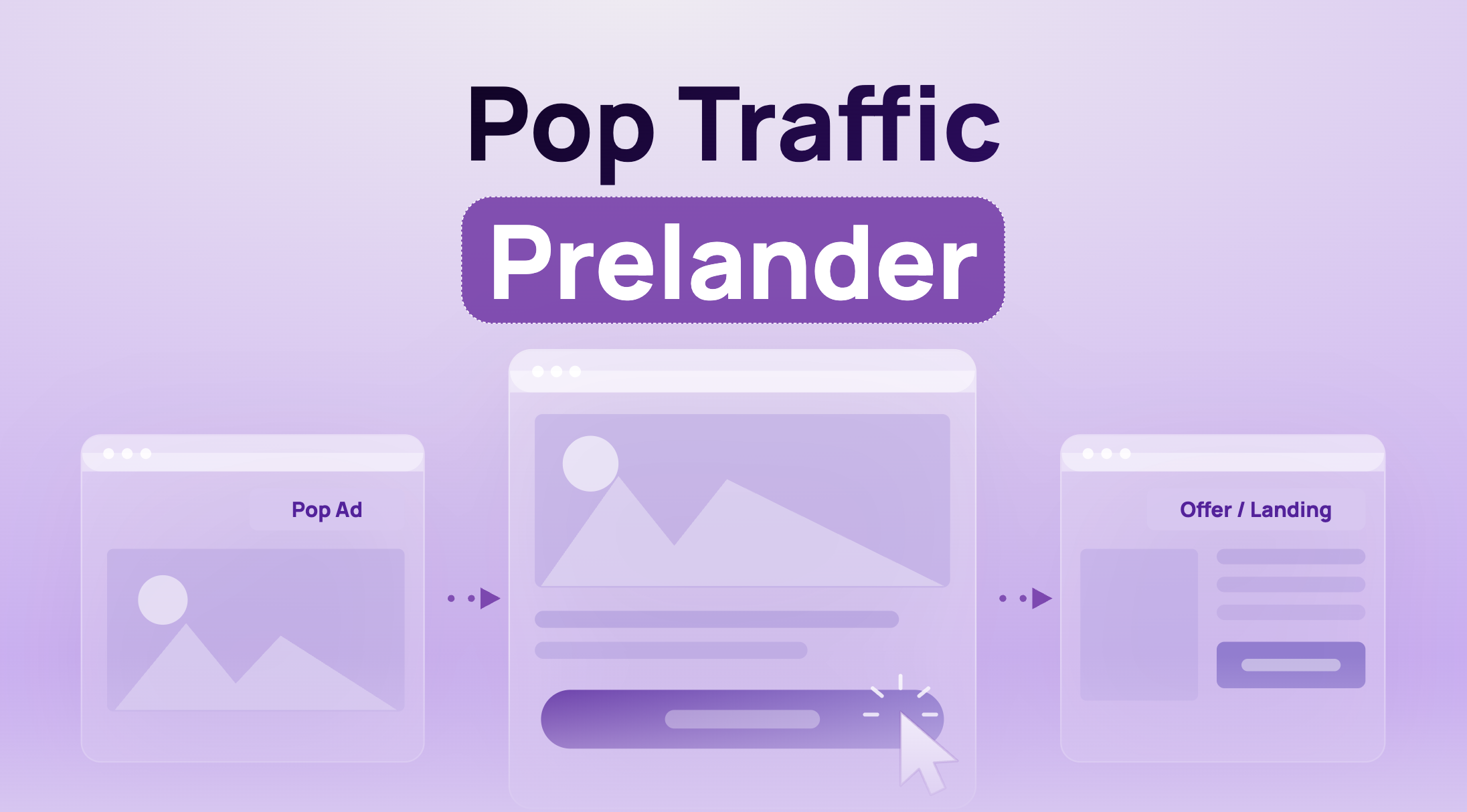
In other words, it sits in the flow like this: pop open → prelander → offer page. A direct link skips that middle step. A pop traffic landing page is usually the offer owner’s page. A bridge page is close, but in affiliate slang it often means a lighter pre-frame page, sometimes more compliance-led than persuasion-led. The lines blur in the wild, as they always do.
The useful way to think about it: if the offer page can’t explain itself to a cold user in one glance, the prelander is doing damage control before the click even happens.

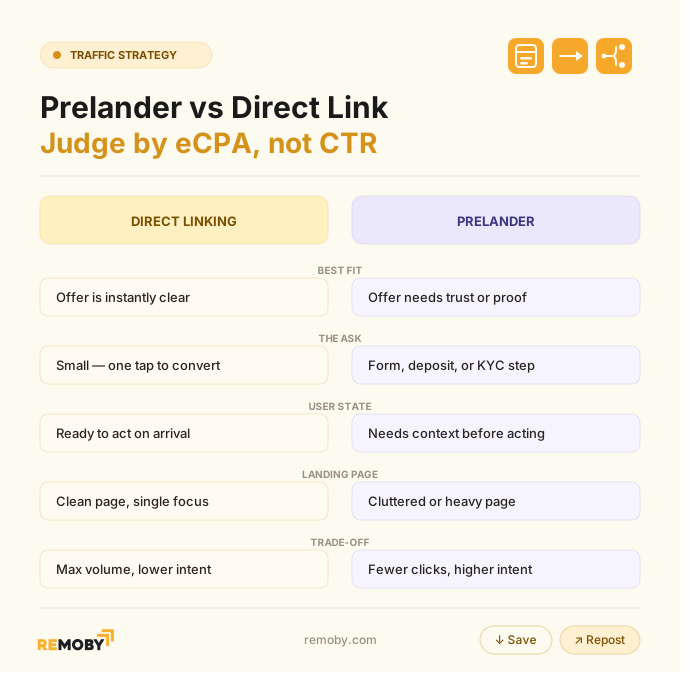
Prelander vs direct linking for pop traffic: which is better?
Prelander vs direct linking for pop traffic depends on friction. Direct linking wins when the offer is instantly clear and the ask is small. A prelander wins when the offer needs trust, context, or qualification before the user sees a form, deposit step, or cluttered page. The deciding metric is eCPA.
This is where buyers fool themselves. They stare at CTR to offer, see a 68% click leak, and kill the page. Then they forget to check what happened after the click.
I’ve done this with an iGaming reg flow in Tier 2 LATAM. The direct link converted at 0.6% overall. The prelander sent only 32% of visitors through, so it looked ugly at first, but offer-page CVR climbed to 2.4% and overall CVR reached 0.77%. eCPA improved by roughly 20% on the same flow. That hurt my ego more than my budget.
That result tracks with the pattern I keep seeing: a prelander can lose two-thirds of traffic at the LP stage and still win if the users who reach the offer are the ones who were going to complete the funnel anyway. It’s just filter page logic.
Use direct link first in a new GEO. Always.
You want a clean read on offer-GEO fit before you add a second variable. If the offer already struggles, adding a prelander only muddies the diagnosis.
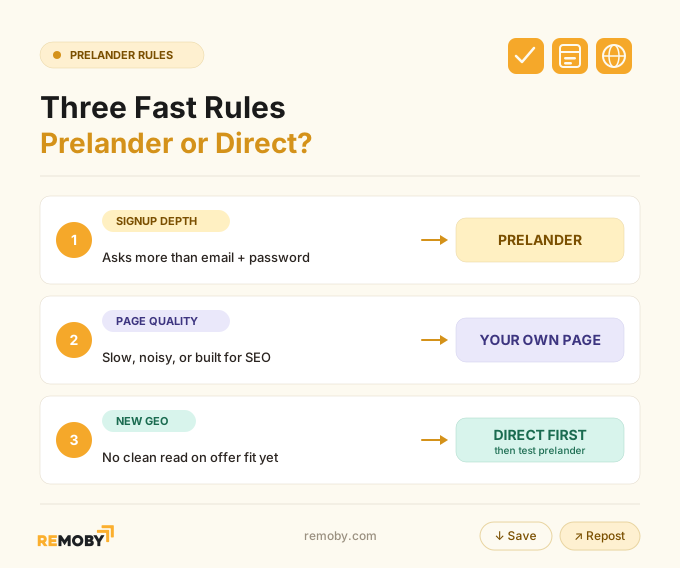
Three fast rules help:
- If the offer asks for more than email and password, use a prelander.
- If the offer page is slow, noisy, or built for search traffic, use a page you control first.
- If you’re entering a new GEO, direct link first, then test the prelander.
A bad Tuesday is a bad Tuesday. Sequential tests lie. But clean direct-link data helps. The harder part starts after that, when you have to separate real filtering from plain old click leak.
Bridge page vs prelander vs landing page: key differences
Failure starts with naming the wrong page type. If you call every middle page a prelander, you’ll test the wrong thing and read the wrong metric.
A bridge page vs prelander pop ads comparison matters because the page depth changes the job. Some bridge pages only pre-frame. A real prelander actively sells the next click. The landing page closes. The direct link skips control completely.
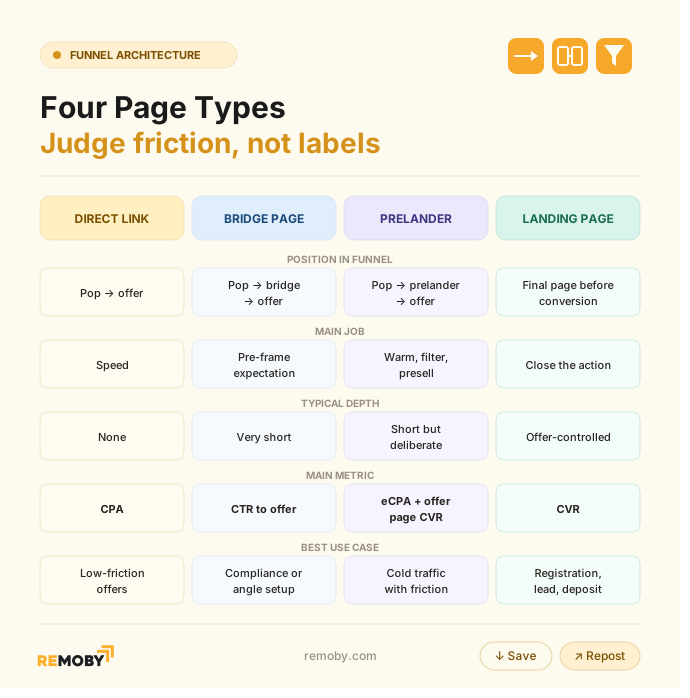
The easiest mistake is pushing a cold pop click straight into a raw registration page and calling the bad CR a traffic problem. It usually isn’t. Sometimes the offer page is the problem, and you don’t control it. Judge each page type by the friction it removes.
What should a pop traffic prelander include for cold visitors?
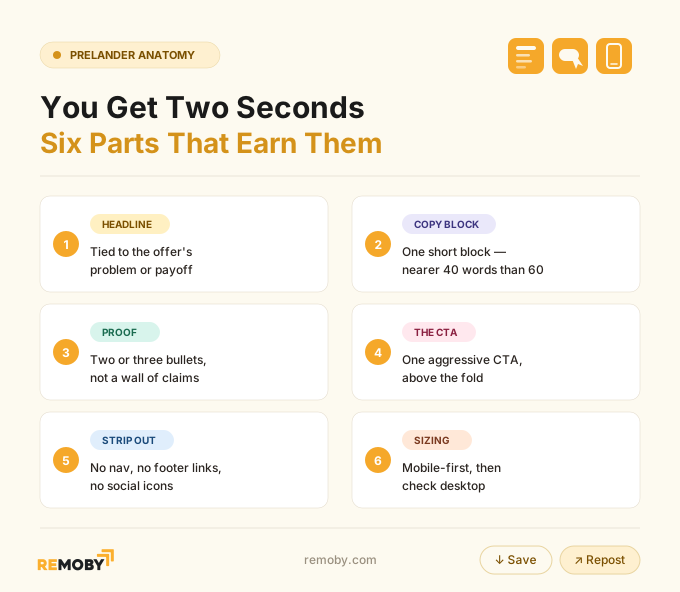
Pop traffic prelander elements for cold visitors are brutally simple: one headline angle, 30–60 words of copy, 2–3 proof points, one dominant CTA, mobile-first layout, and no extra exits. For pop users, the page has about two seconds to explain the next step before the tab gets closed. Every non-CTA click path is a leak.
That two-second window changes everything. Cold pop users don’t read paragraphs. They scan, decide, and vanish.
Here’s the structure I trust:
- Headline tied to the offer’s problem or payoff
- One short block of copy, often closer to 40 words than 60
- Two or three proof bullets
- One aggressive CTA above the fold
- No nav, no footer links, no social icons
- Mobile-first sizing, then check desktop after
If you want pop traffic prelander examples, think less “mini blog post” and more “forced clarity.” A VPN angle might frame speed or privacy in one sentence. An iGaming reg flow might set expectations around welcome value before the signup page. A giveaway flow often needs filtering because low-quality clicks get scrubbed downstream.
Build it light. Inline CSS, compressed images, no web fonts if you can. Cloudflare’s website performance guide is a useful sanity check for mobile loading performance, and the target here is under 1.5 seconds as an industry benchmark.
Some buyers never stop hating this, but the boring version usually wins.
How do you create a pop traffic prelander that improves conversions?
Pop traffic prelander build process is a short workflow: match the angle to the offer, compress the copy, remove every exit path, ship mobile-first, and test against a direct link on the same traffic. The page improves conversions when it sets expectations fast enough to raise downstream CVR more than it hurts click-through.
Here’s how to build it without turning it into a science project:
- Start from the offer ask. If the offer wants a deposit, ID check, multi-field form, or install, write to prepare that action.
- Pick one angle. Curiosity, urgency, problem-solution, quiz, advertorial-lite. One page, one angle.
- Write 30–60 words. Enough to presell. Not enough to invite scrolling.
- Add 2–3 proof points. Think benefits, trust cues, or clear next-step expectations.
- Kill every stray click. No menus, thumbnails, tabs, or fake choice architecture.
- Build for mobile first. Check a mid-range Android before desktop polish. This is where expensive mistakes hide.
- Test only this variable. Keep offer, zones, cap, bid, and timing the same.
If the offer page is already sharp, fast, and self-explanatory, your prelander has to earn its place. Otherwise it’s decoration.
Which metrics show whether a pop traffic prelander is helping?
Pop traffic prelander measurement starts with eCPA, then works backward through LP CTR to offer, click leak rate, offer-page CVR, overall CVR, and final CPA. A prelander that is working often shows lower click-through to the offer but higher offer-page conversion rate, because it filters weak users before they hit the page that actually converts.
This is the part everybody rushes past. If you only watch LP CTR, you’ll kill winners.
Use this checklist:
| Metric | What to compare | What it tells you | Bad read |
|---|---|---|---|
| eCPA | Prelander vs direct | Real cost outcome | Ignoring downstream lift |
| LP CTR to offer | Prelander only | How many continue | Treating low CTR as auto-failure |
| Click leak rate | 100% minus LP CTR | How much traffic drops | Assuming all leak is wasted |
| Offer-page CVR | Visitors on offer who convert | Qualification quality | Not checking post-click behavior |
| Overall CVR | LP visits to conversions | Funnel efficiency | Mixing traffic sources |
| Final CPA | Spend to conversion | Scale viability | Calling early winners too soon |
A fair pop traffic prelander A/B test setup looks like this:
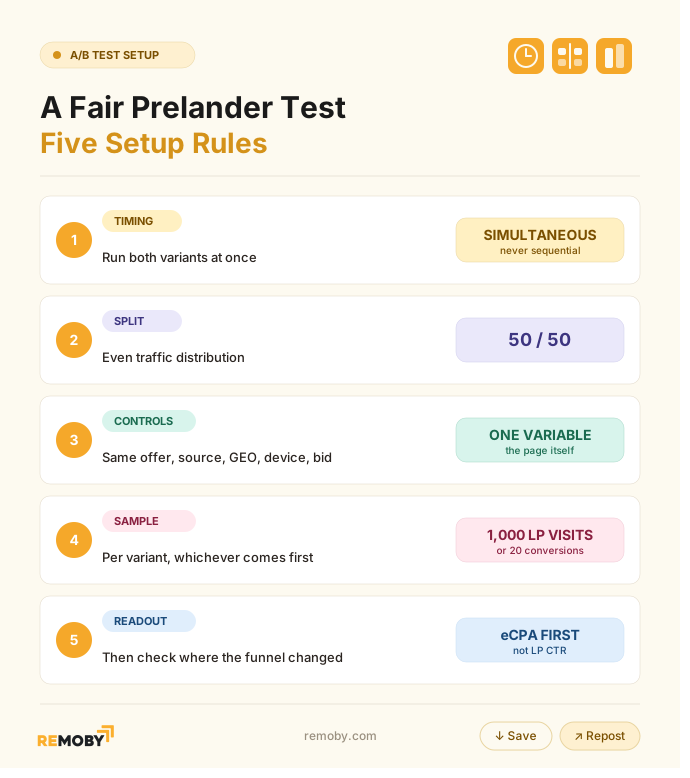
Sequential testing gets corrupted by day-of-week swings. CPMs on pop inventory typically run $0.30–$1.80 depending on GEO (see examples: CPM for the USA, CPM for Mexico, CPM for Brazil, CPM for Indonesia) and quality tier as an industry benchmark, which matters because cheap volume lets you hit a clean sample faster than most buyers expect. Binom and Voluum both split LP visits from offer-page visits cleanly, so you’re not guessing from top-line conversions.
Offer types and funnel patterns that need a prelander
Most buyers default to a vertical list here. That’s the wrong frame. The question isn’t which niche uses prelanders. It’s whether the gap between user expectation and offer demand is large enough to justify the extra step.
High-gap patterns where a prelander earns its place:
- Multi-field lead forms. Finance, insurance, and utility flows where the form is long and the ask feels sudden without context.
- iGaming registrations. Cold pop users hitting a deposit or sign-up page directly tend to bounce fast. A short presell with expected terms cuts that drop. Check our iGaming case study and how a prelander worked there.
- App installs with permission steps. If the install process has friction, permissions, warnings, or sideload instructions, a prelander that pre-explains the process cuts abandonment.
- Giveaway flows that get scrubbed. SOI giveaway offers can direct link fine on clean inventory. On mixed-quality pop, adding a filtering step removes the junk clicks before they hit the advertiser’s validation.
- VPN and utility subscriptions. One angle sentence on speed, privacy, or price usually outperforms landing cold on a pricing page.
Low-gap patterns where direct linking holds up:
- Single-field SOI email captures with a fast, clean offer page.
- Video on Demand trial pages where the content itself is the hook.
- Short quiz funnels where the offer page already pre-qualifies.
The diagnostic question is always the same: can a cold visitor, zero context, understand and act on this offer in under five seconds? If yes, test direct first. If not, build a prelander.
Common pop traffic prelander mistakes that hurt downstream conversion
Most prelander failures aren’t creative problems. They’re structural. The page adds friction instead of removing it, and the traffic budget burns through a funnel that was broken before the first impression.
Mistakes worth avoiding:
- Extra links anywhere on the page. Every logo, nav item, image link, or footer URL is an exit. Pop users will take them.
- Copy over 80 words. Nobody reads it. Long copy on a prelander is a sign you haven’t decided what the page is actually for.
- Slow load. Above 1.5 seconds on mobile, bounce rate climbs fast. On $0.50 CPM Tier-3 traffic, the waste compounds quickly.
- Autoplay audio or video. Tabs opened in the background, which is most pop inventory, will get closed the moment sound fires. This is especially punishing on mobile.
- Angle mismatch. If the ad creative implies one thing and the prelander delivers another, you’ve trained the user not to trust the next page either.
- Desktop-first builds. Most pop volume is mobile. A page that renders cleanly on a 27-inch monitor and breaks on a mid-range Android is wasting most of its impressions.
- Running the prelander test sequentially. Day-of-week variation will corrupt the read. Run both variants simultaneously.
The one that catches buyers the most: assuming click leak is the problem when offer-page CVR hasn’t even been checked. Judge in the right order.
Simple optimization roadmap after launch
After the prelander goes live, most buyers stare at LP CTR and panic too early. Here’s a tighter sequence.
Week one: Don’t touch the creative. Let the test run to sample. Watch eCPA only.
After minimum sample: Compare offer-page CVR between variants. If the prelander wins on eCPA, lock it as control. If it loses, check where. Is click leak higher than expected, or is offer-page CVR flat? Those are different problems.
First creative test: Headline angle. Change nothing else. One angle per variant. Run for the same minimum sample.
Second test: Either a CTA copy or a button placement.
Third test: Proof point format, bullets vs single trust line vs social signal.
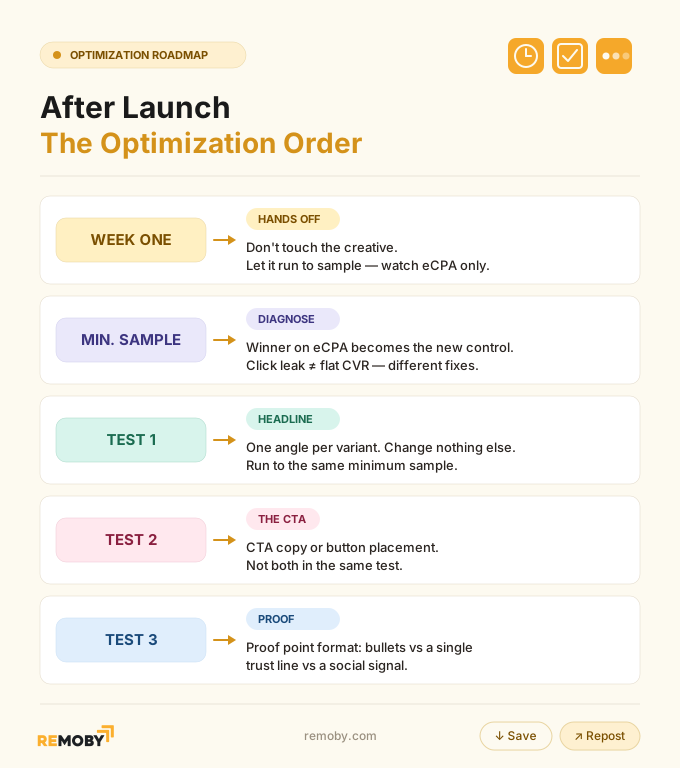
After those three tests, you usually know whether the prelander is structurally sound or if the issue is upstream — zone quality, bid, or GEO-offer fit. Testing CTA color before you’ve validated the angle is a classic way to generate data that answers the wrong question.
FAQ for pop ads prelanders
Affiliate offers that usually need a pop traffic prelander are the ones with a big expectation gap between the first view and the final ask. Multi-field lead forms, iGaming registrations, finance forms, app installs, VPN subscriptions, and cluttered offer pages tend to benefit because the prelander warms, filters, or explains before the user commits. The vertical name doesn't decide it. The ask does. A giveaway SOI flow can direct link fine if the page is clean and the promise is obvious. A finance lead form with five fields and trust friction usually can't.
Pop traffic prelander click leak happens when the page gives users extra ways to exit or too much to think about before the CTA. Long copy, multiple buttons, autoplay, slow load, weak mobile rendering, and mismatch between the angle and the offer all create drop-off. Some leak is acceptable if the remaining users convert better and eCPA falls. This is the counterintuitive part. Leak isn't automatically waste. Bad leak is random loss. Good leak is filtering. If your offer-page CVR doesn't improve after adding the prelander, you built friction for nothing.
Pop advertising examples usually make more sense by funnel type than by vertical. Common flows include giveaway SOI, utility app installs, VPN subscriptions, iGaming registrations, finance lead forms, and Video on Demand trial pages. Networks like PropellerAds, PopAds, Adsterra, Clickadu, and Remoby are all places buyers test those flows. The good examples share one trait: the funnel matches the traffic. Short ask, fast page, clear angle.