Updated: July 28, 2026
|
13 min read
Updated: July 28, 2026
|
13 min read
What Is a Media Buyer? Role, Workflow, and Boundaries Explained

What is a media buyer? A media buyer is the person who turns a plan into a live media buy, commits spend, and keeps that inventory performing once the campaign is running.
What Is a Media Buyer? Simple Definition and Role Boundary
Media buyer is the role that secures ad placements and manages paid delivery once strategy turns into committed spend. In practice, the buyer takes goals, budget, audience, and channel direction from a plan, then handles platform setup, inventory choices, bids, pacing, optimization, and reporting. Example: a planner says to push budget into Meta Ads and programmatic video; the buyer launches the campaigns, manages the buy, and fixes underperforming placements.
A one-sentence definition beginners can quote
A media buyer is the person responsible for placing ad spend into actual inventory and making that spend perform after launch. The cleanest boundary I’ve heard is this: the planner owns what to buy and why, the buyer owns executing the buy and making it work.
If you want the workflow itself – launch steps, metrics, first-campaign mistakes – see media buying for beginners.
Where the media buyer sits between planning and campaign management
Most people assume the handoff is fuzzy. It is in small teams, but the real marker is pretty clear: once spend is committed through an insertion order or a funded campaign in a self-serve platform, planning is basically over and buying starts. The IAB’s digital media buying and planning certification overview reflects this broader split between planning and buying responsibilities.
In digital, that border blurs because buyers make in-flight decisions that look strategic. A buyer running Google Ads, Meta Ads Manager, or a pop campaign on Remoby (one network worth testing for Tier-2 push) is still adjusting bids, placements, zones, pacing, and creatives long after launch. In traditional buying, the split is cleaner; the planner can spend weeks with Nielsen or Comscore data, and the buyer steps in later to secure placements and verify delivery.
I used to think role confusion was harmless until I watched three people “own” the same campaign and nobody own the broken tracking. That week was expensive.
The title is the easy part. The harder part is seeing what the buyer actually touches once a campaign goes live.
What Does a Media Buyer Do Across a Campaign?
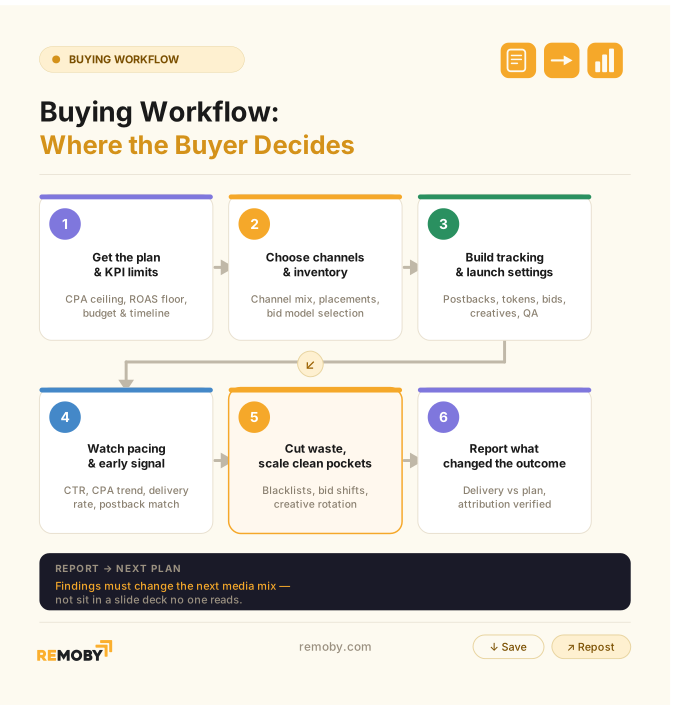
What is a media buyer in practice? Media buyer handles the campaign after strategy becomes spend, moving from setup to launch, monitoring, optimization, and reporting. In practice, the job is less about one big decision and more about dozens of small ones that affect delivery and CPA. Example: a buyer may approve the initial audience and budget split on Monday, then blacklist weak inventory, swap creatives, and rebalance spend by Wednesday.
The system behind those daily calls is the performance media buying framework – bid ceilings, measurement gates, and budget tiers.
1. Receive goals, audience, and budget from the plan
If the handoff is sloppy, the whole funnel starts crooked. Buyers need the target KPI, approved offer, GEOs, audience, budget limit, and reporting window before touching the platform.
That sounds obvious, but this is where bad campaigns get born. If the plan says “drive conversions” and nobody defines whether success is leads, sales, installs, or qualified calls, the buyer optimizes the wrong event and everybody acts surprised later (this is the part everyone skips).
2. Choose channels, inventory, placements, and buying approach
A buyer decides where the money goes at the execution level. That includes platform choice, inventory type, whitelist or blacklist logic, device mix, prospecting versus retargeting, and whether the buy should run broad first or through tighter placements.
In performance traffic, this is where experience shows up. Pop traffic to a weak registration page, broad push with no prelander, or programmatic inventory with no placement controls will burn fast. The wrong channel does not “need more time”. It usually needs a different funnel.
3. Set up targeting, bids, budgets, tracking, and launch details
One broken postback can make a decent buyer look clueless. Setup is where media buying becomes operational: audiences, bids, campaign caps, dayparting, creatives, UTMs, tracker routing, and conversion events all need to line up.
I’ve killed campaigns too early because tracking was off by one event and the dashboard made the funnel look dead. The creative was fine. The postback was wrong. Same old story.
4. Monitor delivery, pacing, and early performance
In many digital accounts, buyers make useful decisions in hours, not weeks. Digital plans, IOs, and launch can happen the same day, while traditional planning and negotiation often stretch across several weeks before the buy even starts.
Early monitoring means checking pacing, spend concentration, CTR, click quality, CR, and whether one placement is eating the budget. If 20% of zones consume 70% of spend and none convert, waiting for “more data” is how budgets disappear.
5. Optimize spend, placements, audiences, and creatives
Media buying gets judged here. Buyers trim waste, raise bids where volume is clean, split out winners, rotate creatives before ad fatigue hits, and map the right creative to the right prelander and offer.
I learned this one by doing the dumb version first: scaling a push whitelist too fast. Volume went up, CTR looked healthy, and CPA quietly got worse because the new inventory was nothing like the original pocket. Looked like scale. Wasn’t.
Non-obvious fix: sometimes the best optimization isn’t a bid change. It’s separating placements by intent. A buyer who breaks one campaign into cleaner buckets often beats the buyer who keeps “optimizing” a blended mess.
6. Report results and feed insights back into the next campaign
Reporting is where buying either compounds or resets to zero. A good report does not stop at spend and ROAS; it shows which inventory, audience, creative angle, and funnel path actually carried the result.
Use the report to influence the next plan. If Meta produced cheap clicks but weak conversion quality while push delivered fewer clicks and better CPA, that should change the next media mix, not sit in a slide deck no one reads.
Once you see the workflow, the next confusion shows up fast: people lump buyer, planner, and manager into one title when the scope is not the same.
Ready to launch with Remoby?
Media Buyer vs Media Planner vs Paid Media Manager
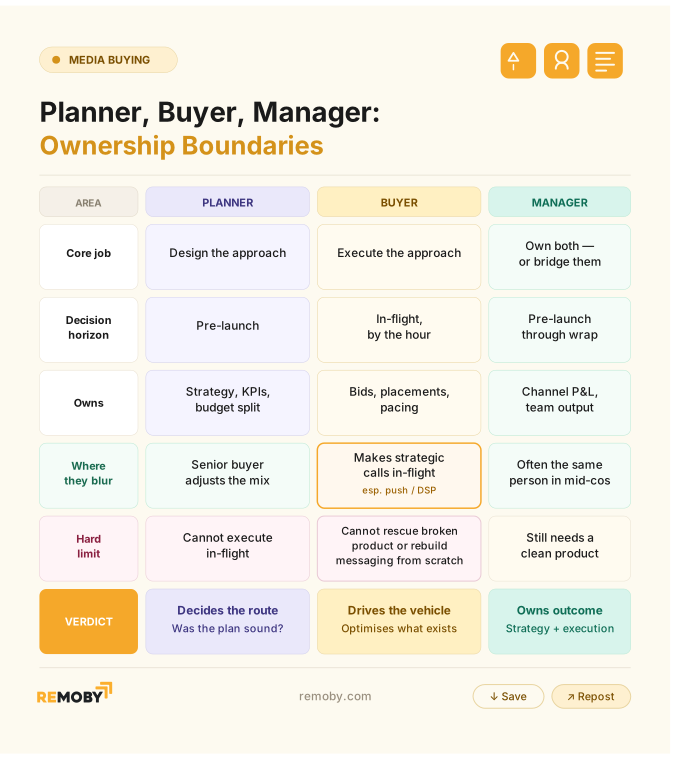
Media buyer, media planner, and paid media manager overlap, but they do not own the same part of the work. Media planner chooses channels, audience logic, and budget direction; media buyer executes the media buy and improves live delivery; paid media manager usually owns broader strategy, budget allocation, reporting, and sometimes people management. Example: in a mid-sized agency, the planner builds the channel mix, the buyer runs the campaigns, and the manager decides trade-offs across accounts.
The planner–buyer boundary, handoffs, and KPIs are compared in detail in media planner vs media buyer.
Quick comparison table: goals, responsibilities, and ownership
What most beginners get wrong is assuming these are title swaps. In real teams, scope is the difference.
| Role | Main goal | Owns strategy? | Owns live execution? | Typical work |
|---|---|---|---|---|
| Media planner | Build the channel and budget plan | Yes | Rarely | Audience research, channel mix, budget allocation, reach/frequency planning, vendor shortlist |
| Media buyer | Execute and optimize media buying | Partly in digital/performance environments | Yes | Placements, bids, pacing, inventory management, optimization, trafficking |
| Paid media manager | Own paid growth and business outcomes across channels | Yes | Often, but not always hands-on | Strategy, budget governance, team oversight, reporting, stakeholder communication |
| Verdict | Think in layers: planning vs execution vs ownership | Planner defines direction | Buyer runs campaigns day-to-day | Manager owns overall paid media performance and accountability |
Is a media buyer the same as a paid media manager?
Media buyer is not the same as a paid media manager, even though many companies use the titles loosely. A buyer is usually execution-heavy and focused on campaign setup, bids, placements, pacing, and optimization. A paid media manager usually owns wider strategy, cross-channel budget allocation, reporting, and sometimes team leadership. Example: if the role asks for hiring, forecasting, and channel strategy, it is closer to manager than buyer.
Where performance marketing overlaps with media buying
The overlap is real, especially in performance teams. A buyer running Google Ads, TikTok Ads, DSP campaigns, or push traffic is often making strategic calls in-flight because digital inventory changes by the hour.
That is why senior buyers and paid media managers blur together in mid-sized companies. But when things break, the difference shows up fast: buyers optimize what exists; they do not rescue a broken product, rebuild messaging, or invent positioning from scratch.
Titles get messy inside digital teams. The environment itself changes the job more than most job descriptions admit.
Do Media Buyers Work in Both Digital and Traditional Advertising?
Media buyers work in both digital and traditional advertising, but the job behaves differently in each environment. Digital buying is faster, more reactive, and more measurable in-flight; traditional buying is slower, more negotiated, and more focused on verification after placements are locked. Example: a buyer can adjust bids inside Meta Ads in an hour, while a TV or OOH buyer is more likely to confirm flighting and reconcile delivery.
How digital media buying works
If you run digital, the buyer is inside the machine all day. Inventory shifts, auctions move, creatives fatigue, and pacing drifts, so the work is constant adjustment across search, social, DSP, native, push, pop, and video.
That is why digital buyers often look half planner, half trader. Zone-level whitelisting, bid changes by GEO, creative testing, and funnel mapping all happen after launch, not before.
How traditional media buying works
Traditional buying is less forgiving on setup and slower on change. Once TV, radio, print, or OOH placements are booked, the buyer’s job becomes stewardship: confirm the media buy ran as agreed, check placement dates, validate delivery, and reconcile invoices.
Amazon Ads’ overview of media buying and Tuuti’s guide to traditional media buying and media launch plans both describe media buyers across channels, but they stop short of showing this operational difference. In practice, traditional buying leaves far less room for in-flight optimization.
What changes in speed, optimization, and measurement
Most people think the title means the same work everywhere.
It doesn’t.
Digital buyers optimize hourly. Traditional buyers verify delivery against a plan. Same title, different pressure. One is fighting auction movement and ad fatigue; the other is making sure the inventory bought is the inventory delivered.
Once you separate the environments, the skills question gets easier — because the KPI stack follows the work.
Media Buyer Skills, Tools, and KPIs
Media buying usually comes down to three things: judgment under pressure, clean execution, and knowing which numbers deserve action. Common tools include ad platforms such as Google Ads and Meta Ads Manager, DSPs for programmatic buying, and reporting or tracking systems like Voluum, Binom, and RedTrack. Common KPIs include CPC, CTR, CPA, impressions, pacing, and ROAS. Example: if pacing is on target but CPA has doubled, the buyer looks at inventory quality before increasing budget.
Core skills linked to day-to-day buying work
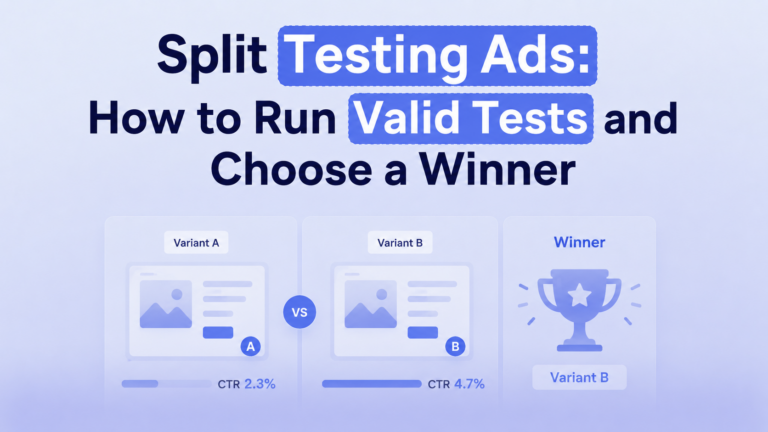
A buyer needs pattern recognition more than theory. That means reading early signal without overreacting, spotting bad inventory fast, managing spend discipline, communicating clearly, and knowing when a performance problem belongs to traffic versus the funnel. One skill worth training deliberately: split testing ads – most buyers run invalid tests without noticing.
Negotiation still matters too, especially outside self-serve platforms. Even in digital, rates, placement access, and inventory quality still move through human relationships.
Common tools: ad platforms, DSPs, and reporting systems
Failure usually starts when the tool stack is fragmented. Platform data says one thing, the tracker says another, and nobody trusts the report.
A practical stack often means Google Ads or Meta Ads Manager for self-serve channels, a DSP for programmatic inventory, and a tracker like Keitaro or Voluum for routing and postback accuracy. In push and pop, buyers also live inside placement reports, whitelist files, and blacklist logic. Fancy dashboards do not fix dirty inputs.
Key KPIs: CPC, CTR, ROAS, impressions, pacing, and conversion results
A high CTR with weak CR is not a win. A low CPC on junk inventory is not efficient. Metrics only matter in context of the next decision. Teams often benchmark these with paid media KPI guides before deciding whether a change is actually underperforming.
If ROAS is healthy but the campaign is under-pacing, the buyer solves for delivery. If impressions are strong but conversions are flat, the buyer checks audience quality, creative-to-offer fit, and tracking order before touching bids. That’s the difference between reporting numbers and managing a media buy.
When a Business Needs a Media Buyer
A dedicated buyer makes sense when execution quality is the bottleneck. If the business is still figuring out product-market fit, messaging, or whether the funnel itself works, a buyer is early.
Signs a specialist media buyer is worth hiring
Around $50k/month in ad spend is a common breakpoint where a dedicated buyer starts paying for themselves; a 10% efficiency gain there can cover salary several times over. Another trigger is channel sprawl: once a team runs three or more paid channels, especially beyond Meta and Google into push, pop, programmatic, or retail media, a generalist starts dropping balls.
Leadership pressure matters too. If every performance swing needs an accountable explanation, you need someone who owns pacing, inventory, and optimization daily.
When a generalist or paid media manager may be enough
Below roughly $30k/month, a generalist often wins on cost and flexibility. That is even more true when the real problem is creative, offer-market fit, or a shaky funnel.
Buyers optimize what exists. They do not fix a broken landing page by staring harder at placement reports.
Hiring is one problem. Reading titles correctly is the next one, because half the market labels execution-heavy work as management.
How to Tell if a Job Description Is Really Asking for a Media Buyer
What is a media buyer role in hiring terms? Job description is really asking for a media buyer when the responsibilities center on campaign setup, inventory choice, bid management, pacing, platform execution, and optimization against an existing plan. Roles that emphasize broader strategy, forecasting, hiring, and cross-channel ownership are closer to paid media management. Example: if the brief asks for whitelisting placements, launching campaigns, and improving CPA, that is buyer work even if the title says manager.
Job title clues and responsibility keywords to look for
Look for verbs, not titles. “Launch,” “optimize,” “manage bids,” “monitor pacing,” “handle placements,” and “report on campaign performance” usually point to buying.
Salary bands often tell the truth faster than the title does. So does platform specificity: if a role wants hands-on ownership in Google Ads, Meta Ads Manager, The Trade Desk, or zone-level push optimization, it is usually a buyer role wearing a broader name.
What usually signals a broader paid media management role instead
If the role owns annual budget planning, channel strategy, team management, forecasting, stakeholder approvals, and agency coordination, it is broader than media buying. Same if success depends on setting the plan rather than executing it.
The clue is scope. Buyers live in the account. Managers live in the account and the business decisions around it.
Ready to launch with Remoby?
FAQ: What is a Media Buyer
Top 4 questions on what is a media buyer
What is a media buyer? Media buyer is the role that purchases ad inventory and manages live paid campaigns after strategy becomes committed spend. The job usually covers placements, bids, pacing, optimization, and reporting, while a planner or manager may own broader strategy.
Media buyer handles the execution side of a campaign: choosing inventory, launching the media buy, setting budgets and bids, checking pacing, cutting waste, scaling winners, and reporting what actually drove results.
Media buyer executes and improves the live campaign, while media planner decides the channel mix, audience direction, and budget approach before spend is committed. In smaller teams, one person often does both.
Media buyer is not always the same as a performance marketer. Performance marketing is broader and usually includes funnel strategy, creative testing, analytics, and business-level outcome ownership, while the buyer is more focused on the media buy itself. The teams that stop arguing about titles usually get better faster. Once one person owns the buy, the wasted spend gets easier to spot — and the campaign finally tells you what is actually broken.