Updated: July 28, 2026
|
14 min read
Updated: July 28, 2026
|
14 min read
Media Planning vs Media Buying: What’s the Difference?

The split looks obvious until a campaign misses target and two people blame different parts of the same workflow. Most teams say the problem sits in buying. A lot of the time, the error entered earlier.
Media planning and buying only look interchangeable from the dashboard view. In media planning vs media buying, the cleanest distinction is this: planning decides the mix, budget logic, KPI thresholds, and assumptions; buying commits spend, traffics inventory, manages pacing, and adjusts delivery against live data.
Media Planning vs Media Buying: Direct Definitions and the Core Difference
Media planning vs media buying means strategy first, execution second. Media planning sets audience, channel mix, budget allocation, timing, and KPI logic before spend goes live. Media buying turns that plan into placements, bids, insertion orders, trafficking, and in-flight optimization. Example: a planner chooses push plus pop across three Tier-2 GEOs; a buyer then funds campaigns, negotiates rates, launches zones, and manages pacing.
New to the execution side? Start with media buying for beginners.
Is media buying part of media planning or a separate function?
Most people treat buying as a subtask of planning. In practice, buying is a separate function that depends on planning but owns a different set of decisions.
The clearest handoff is not brief approval, and it is not the RFP. Buying begins when money gets committed: the insertion order goes out, or a funded campaign gets created in a platform. In Google Ads or Meta Ads, that means budget is live inside the account. In push and pop environments like PropellerAds, RichAds, or Remoby — a hybrid SmartCPM + RTB system with direct publisher relationships — it is the moment the campaign exists in the UI with deposit allocated. That line matters because ownership changes with it. Before that, the question is “should we run this mix?” After that, the question is “how do we make this inventory perform?”
Are we still testing the plan, or are we fixing delivery? Did the assumption break, or did the execution slip?
That distinction gets easier when you have to explain it to a client in one sentence instead of three job descriptions.
How to explain the difference to a client in one campaign workflow
If you need client language, say this: the planner decides where budget should go and why; the buyer makes sure that budget actually lands in the market at workable rates and keeps it from burning in the wrong places.
That framing works because it follows campaign flow. The planner defines the channel mix, flighting, R&F targets, and stop-loss rules. The buyer turns that into rate card conversations, placement selection, trafficking, blacklist or whitelist logic, and optimization logs. If a push funnel floods impressions but EPC never clears target, the planner should revisit the assumption behind the mix, not dump everything on the buyer. IAB’s media planning playbook supports the strategy-versus-execution split; the useful part is attaching it to when spend becomes irreversible.
Once you label the handoff correctly, the next problem appears fast: who actually owns each campaign decision when the work stops being theoretical?
Media Planning vs Media Buying Comparison Table
A table solves what most role explainers avoid: explicit ownership.
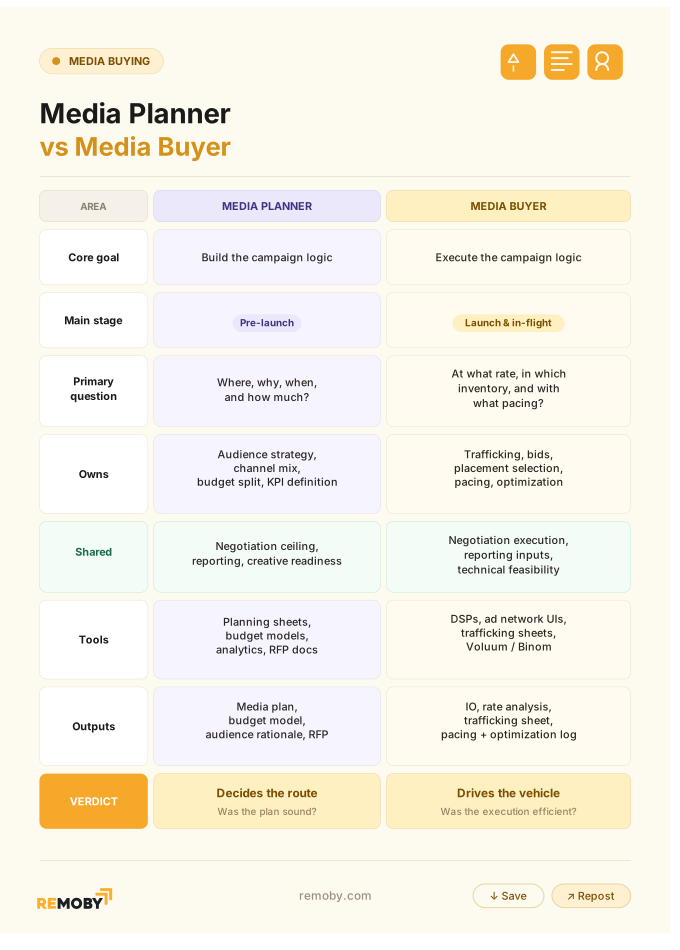
The table looks neat on paper. Real teams get messy at the exact point where a plan moves from spreadsheet logic into live inventory.
Where Media Planning Ends and Media Buying Begins in the Campaign Workflow
Media planning hands off to media buying when the approved strategy turns into committed spend. That trigger usually happens at the insertion order in direct buys or the funded campaign creation in self-serve and programmatic platforms. Example: a planner approves a push and pop mix with KPI thresholds; a buyer then sends the IO or launches the campaigns inside the network and owns pacing from that point forward.
What happens after the handoff is the buyer’s execution system – see the digital media buying framework.
Typical handoff trigger: approved strategy, budget, channel mix, and buying instructions
Failure usually starts one step earlier than people think. Teams call it a buying issue when the handoff never included verifiable assumptions.
A clean handoff has four pieces:
- Approved channel mix and budget allocation.
- KPI thresholds, including stop-loss and scale conditions.
- Buying instructions: publishers, platforms, rate ceilings, format constraints.
- Technical package: assets, tags, tracking, trafficking sheet.
One short line improves this more than any template: kill the plan if X happens. Example: “Kill the GEO split if EPC in GEO B stays below $0.40 after 20,000 clicks”. That forces the planner to write something testable instead of “GEO B usually works”. (the docs won’t tell you this)
The handoff is clean only until the first 48 hours of data arrive and start arguing with the original assumptions.
Feedback loops after launch: when buyers send performance signals back to planners
The first useful feedback loop is not ROAS on day one. It is mismatch detection between planned assumptions and live inventory behavior.
Buyers see it first because they watch serve-out, pacing, viewability, underdelivery, zone quality, and bid pressure in real time. If one channel spends too fast, another underdelivers, and the strongest CR comes from placements the original mix underweighted, the buyer has found signal that belongs back in planning. This happens a lot in iGaming and Social funnels where placement quality shifts faster than static pre-launch research. The optimization log matters here because it records what changed, when, and why. Without it, every retrospective turns into guesswork. (this is where most implementations break)
When that feedback loop is missing, ownership arguments start sounding philosophical. They are not. They are operational.
Who Owns Strategy, Channel Selection, Negotiation, and Optimization?
Strategy, channel selection, and KPI definition sit with the planner; negotiation execution and in-flight optimization sit with the buyer; budget control and reporting often stay shared. Media planning and buying decisions split here for a reason. Media planning decides the route, while media buying reacts to live market conditions inside that route. Example: a planner sets 60% push and 40% pop across two GEOs, then a buyer negotiates inventory, adjusts bids, rotates creatives, and blacklists weak zones after launch.
Ready to launch with Remoby?
Ownership matrix: planner, buyer, shared, or varies by team structure
If you assign optimization to the planner, you slow response time. If you assign channel strategy to the buyer by accident, you lose control of campaign logic.
| Decision | Owner |
|---|---|
| Audience and offer fit | Planner |
| Channel mix | Planner |
| Budget split by channel/GEO | Planner |
| KPI definition | Planner |
| Rate ceiling | Shared |
| Negotiation execution | Buyer |
| IO / funded campaign setup | Buyer |
| Trafficking and tags | Buyer |
| Pacing adjustments | Buyer |
| Bid management | Buyer |
| Zone/placement optimization | Buyer |
| Mid-flight plan revision | Shared |
| Wrap report | Shared |
| Verdict | Planner defines direction; buyer controls execution; shared zones require alignment, not overlap |
How ownership shifts in direct buys, self-serve platforms, and programmatic environments
What most people assume: programmatic makes planning and buying merge. Reality: the UI compresses the workflow, but the decisions still split.
In direct buys, the buyer spends more time on rate card pressure, makegood terms, underdelivery, and publisher communication. In self-serve environments like Google Ads, TikTok Ads, or push networks, the buyer absorbs more trafficking and bid logic inside the platform. In programmatic, planners still own mix and budget logic, while buyers own inventory access, deal setup, and bid behavior. Programmatic campaign optimization best practices reinforce why in-flight optimization remains a buyer-side execution discipline even when the interface makes the workflow look unified. Pop and push add one extra blur zone: whitelist and blacklist decisions often start as execution, then become strategic once pattern quality stabilizes across a GEO. That is why strong teams treat zone notes and prelander mapping as part of both the funnel view and the buying log.
Media Planner Responsibilities by Campaign Stage
A planner earns the role before launch, not during bid edits.
Audience, channel strategy, budget modeling, forecasting, and plan approval
Planning work controls the assumptions that later determine whether the buyer has any chance of hitting target. Core planner responsibilities include audience definition, channel mix, budget modeling, flighting, forecast ranges, KPI thresholds, and approval logic. The media planning process frames this as the blueprint stage, which holds up in practice. The stronger version adds explicit assumptions: expected EPC, expected inventory volume, acceptable CPA band, and the point where the plan should stop.
I have seen campaigns where the spreadsheet looked disciplined and the logic still failed because one borrowed benchmark came from the wrong vertical. The plan was tidy. The assumption was garbage.
That mistake hides well until the buyer starts doing excellent execution against a plan that never deserved the spend.
Media Buyer Responsibilities by Campaign Stage
The buyer owns the part where theory meets inventory and starts leaking money. The full media buyer role and workflow is covered separately, and here’s what it owns by stage.
Negotiation, insertion orders, trafficking, pacing, bid management, and in-flight optimization
Buying work includes negotiation, insertion orders, trafficking, launch QA, pacing, bid management, creative rotation, and inventory control. In a tracker-led setup using Keitaro or RedTrack, it also means making sure the postback, token passing, and reporting view line up with what the platform says is spending. That sounds obvious until a campaign serves cleanly and the funnel bundle reports late or wrong.
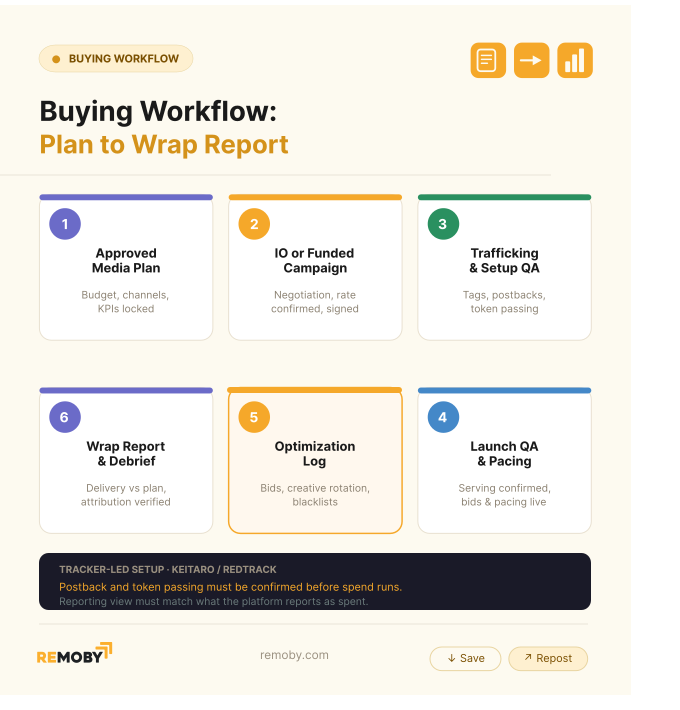
The buyer’s hardest job is not clicking launch. It is deciding whether weak performance means cut bids, cut zones, or push the problem back upstream into the plan.
Which Deliverables Belong to the Media Planner and Which Belong to the Media Buyer?
Deliverables split by decision ownership. Planner deliverables usually include the media plan, budget model, audience rationale, channel mix, KPI framework, and RFP inputs. Buyer deliverables usually include insertion orders, trafficking sheets, pacing reports, optimization logs, and execution notes. Shared deliverables include negotiated terms, wrap reports, and any mid-flight revision document. Example: the planner writes the budget logic; the buyer records why Zone 143 was blacklisted after 12,000 clicks and poor CR.
Planner deliverables: media plan, budget model, audience rationale, and RFP inputs
A plan without deliverables is a meeting, not planning.
Planner outputs should include the media plan, audience rationale, budget model, flighting schedule, KPI sheet, forecast notes, and RFP inputs. In agency setups, these often move through approval layers before any buyer touches inventory. In-house, they compress into fewer docs, but the function stays the same.
The buyer can launch without these. The campaign usually proves why that was a bad idea within a week.
Buyer deliverables: rate card analysis, insertion order, trafficking sheet, pacing report, optimization log, and wrap report
Failure here looks technical, but it usually appears first as wasted spend.
Buyer outputs include rate card analysis, insertion order, trafficking sheet, launch checklist, pacing report, optimization log, and performance extracts for the wrap report. The optimization log is the underrated one. Without timestamps on bid changes, creative swaps, whitelist changes, and budget reallocations, you cannot separate a buying error from a bad plan during postmortem.
One more layer matters because some outputs never belong cleanly to one side.
Shared deliverables and approval checkpoints
Most people want a clean split. Real workflows keep a few artifacts shared because both sides touch the risk.
The insertion order is shared in practice: the planner influences rate boundaries and availability, while the buyer confirms technical feasibility and launch details. The wrap report is shared too: buyers provide performance data, planners contextualize results against the original strategy. That shared layer is where planning revisions happen instead of random in-flight opinion changes.
Once deliverables are labeled, KPI disputes get easier because you can tie outcomes back to the decisions each side actually controlled.
What KPIs Judge Success in Media Planning vs Media Buying?
Media planning KPIs judge whether the strategy made sense before and across launch; media buying KPIs judge whether live execution extracted efficient performance from the chosen inventory. Planning usually tracks forecast accuracy, reach, frequency, channel mix performance, and budget allocation quality. Buying usually tracks pacing, CTR, CPC or CPM efficiency, CPA, ROAS, viewability, and serve-out.
Planning KPIs vs buying KPIs, mapped to controllable decisions
A 30% ROAS miss does not automatically indict buying. It only indicts buying if the execution metrics say the plan was still valid.
Planner KPIs tie to controllable choices: forecast variance, spend distribution by mix, R&F against target, and whether the approved budget model matched actual opportunity. Buyer KPIs tie to execution: pacing against flight, rate achieved versus ceiling, underdelivery, CTR, CPA, ROAS, and zone-level performance. This matters in review meetings. If CPM came in on target, pacing stayed clean, and whitelist quality improved, but the funnel still missed revenue goals, the planner needs to revisit the assumption set before blaming the buyer.
That same logic becomes harder, not easier, when one person owns both roles and can quietly rewrite the past from memory.
If One Person Handles Both Planning and Buying, How Do the Responsibilities Still Differ?
When one person handles both planning and buying, the functions still differ by timing and decision type. Planning happens before launch and defines budget logic, KPI thresholds, GEO mix, and stop-loss rules. Buying starts when that same person commits spend in the platform and then manages pacing, bids, and optimization. Example: a solo buyer writes a one-page plan before launch; every action in the network UI after that belongs to buying.
Overlap zones, role compression, and how to keep strategic and execution decisions separate
In solo setups, the common failure mode is obvious: launch first, rationalize later.
Use one rule. Write a one-page planning document before any campaign goes live. Include target CPA or ROAS, GEO and vertical, budget allocation, KPI thresholds, and stop-loss conditions. If you change that document mid-flight, that is a planning revision. If you change bids, zones, or creative rotation inside the platform, that is buying. The split stays conceptual, but it remains useful because it stops you from calling every change an optimization.
The same activity map looks different again once agency layers, in-house approval chains, or tiny traffic teams change who touches the work.
How the Difference Changes in Agencies vs In-House vs Solo Teams
Agency teams usually split planning and buying into separate roles, in-house teams often split them by function under one lead, and solo teams compress both into one seat. The difference stays the same, but ownership boundaries move. Example: an agency planner approves the mix and hands it to a buyer with a trafficking sheet, while a solo affiliate writes the plan and then funds the campaign personally.
Agency roles, in-house teams, and small-team setups compared
If you come from one structure, the others look disorganized. They are usually optimizing for different delays.
Agency setup: cleaner split, more handoffs, more room for disputes about whether weak results came from plan or execution. In-house: less stakeholder drag, so planning compresses and the senior media lead often owns strategy while buyers execute. Solo or small team: fastest launches, highest risk of skipping the planning artifact entirely. The rule that holds across all three is simple: separate pre-launch assumptions from post-launch adjustments, even if the same person owns both.
That rule sounds procedural until you watch a bad handoff burn real spend while everyone keeps optimizing the wrong layer.
Practitioner Example: When a Bad Handoff Looks Like a Buying Problem
An $8,000 loss can hide inside a workflow mistake before anyone names it correctly.
Example breakdown: flawed plan vs poor execution and how to diagnose the source
A representative iGaming example across three Tier-2 GEOs ran mixed pop and push traffic and landed roughly $8,000 in extra spend before the team diagnosed the real issue. Two weeks in, blended ROAS sat 30% below target. The buyer kept changing bids, zones, and creatives because the dashboard made it look like an execution problem. The planner assumed buying quality was weak.
The actual failure sat in planning. The GEO split relied on EPC benchmarks borrowed from a different offer vertical at a previous network. That assumption looked plausible in the doc, but it was never verifiable. Once the team rebuilt the plan around live EPC and inventory conditions, optimization started working because buying finally had a sane target to execute against.
The campaign was never failing because the buyer missed a lever. It was failing because the wrong assumption entered the system before the first dollar moved.
Ready to launch with Remoby?
FAQ for Media Planning vs Media Buying
8 questions to ask about media planning vs media buying
Media planning and buying are not the same stage of work. Media planning is the pre-launch work: audience, channel mix, budget split, KPI logic, and forecast assumptions. Media buying is the live-market work: negotiation, placement selection, campaign setup, trafficking, pacing, and optimization.
Media buying is a separate but dependent function. Planning sets the route; buying commits spend and manages delivery against that route once the campaign is funded or the IO is issued.
Media planning hands off when spend gets committed. In direct buys, that is usually the insertion order. In self-serve or programmatic environments, that is the funded campaign created in the platform.
Strategy belongs to the planner. Channel selection belongs to the planner. Negotiation is shared on boundaries but executed by the buyer. Optimization belongs primarily to the buyer, with planners revising the plan when assumptions break.
Planner deliverables include the media plan, budget model, audience rationale, KPI sheet, and RFP inputs. Buyer deliverables include the IO, trafficking sheet, pacing report, optimization log, and execution extracts. Wrap reports are shared.
Planning KPIs focus on forecast accuracy, mix quality, budget allocation, and R&F targets. Buying KPIs focus on pacing, rate efficiency, CTR, CPA, ROAS, serve-out, and placement-level performance.
Combined-role setups keep the same split by timing. Pre-launch assumptions still count as planning; live bid, pacing, and inventory decisions still count as buying. Writing the plan down is what keeps the two from collapsing into one blur.
Agency models usually separate planner and buyer roles more cleanly. In-house models often keep the split functional under one lead. Small teams compress both roles, which speeds launch but increases the risk of skipping the planning document.