Updated: September 16, 2026
|
8 min read
Updated: September 16, 2026
|
8 min read
Pop vs Push Ads: Decision Framework for iGaming, Finance, and CPA Offers

Two media buyers, same offer, same GEO. One picked pop, one picked push. Three days later one had a working whitelist and the other had a deleted campaign — and neither of them had asked the only question that mattered first.
What is the difference between pop ads and push ads?
Pop ads vs push ads comes down to delivery and intent. Pop ads open a new page or tab without a subscriber relationship, so they bring broader reach and cheaper volume. Push ads go to users who opted into notifications, so traffic is narrower but warmer. Example: a pop campaign can fill a whitelist fast; a push campaign often wins on FTD CPA instead of raw registration count.
Current taxonomy matters because people mix formats up. Classic browser push needs opt-in permission. In-page push looks similar to push but behaves more like on-site ad inventory because it does not rely on browser subscription status. Pop usually means popunder or onclick traffic in network dashboards, and that is the comparison scope here.
The format choice looks obvious until the funnel starts lying through soft metrics.
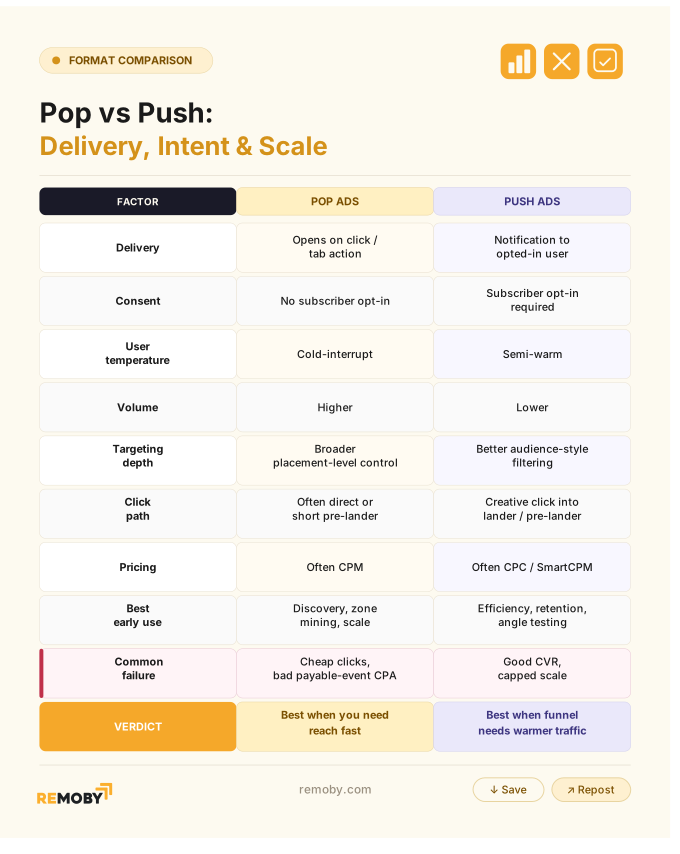
Pop ads vs push ads: quick comparison table
When comparing pop ad networks and push ad networks, most buyers assume push equals “better traffic” and pop equals “junk.” Reality is less neat. Push usually brings more intent; pop usually brings more data, faster, and sometimes that matters more in a new GEO.
Cheap traffic is useful right up until it teaches you the wrong lesson about your offer.
What are pop ads and push ads?
If you blur classic push, in-page push, and onclick traffic together, your test setup is broken before launch. I have seen buyers compare an in-page push campaign against a popunder test and call it a format verdict when they were really comparing two different inventory types.
Pop traffic is broad, fast, and unforgiving. It can hit a registration page, a pre-lander, or a direct-link flow depending on the vertical. Push traffic asks more from the creative side: icon, title, short copy, and a cleaner angle match between ad and lander.
You can call both “traffic formats,” but the decision gets sharper once targeting and click path start doing the damage.
Key differences between pop and push ads
Push traffic outperforms pop traffic on targeting precision when the offer needs a warmer click and tighter audience filtering. Push traffic reaches opted-in users, supports more controlled creative-to-lander matching, and usually filters noise better than broad onclick traffic. Example: when buying iGaming traffic for a sportsbook offer with a reload bonus angle, push often beats pop on FTD rate because the message reaches users already used to notification-style prompts.
The biggest practical difference is not CTR. It is what happens after the click. My experience shows push registration CVR running 2-4x higher than pop, while pop still wins on raw scale. That does not mean push always wins the account. A format can beat on registrations and lose on deposits.
Push also gives you more signal density at the creative level. You can rotate angles, icons, and urgency hooks faster. Pop optimization is usually placement-first: zone cuts, bid cap changes, blacklist cleanup, then pre-lander work.
Better targeting sounds settled until campaign goals force you to choose between cleaner intent and faster learning.
When to choose pop vs push by campaign goal
Pop ads are better for high-volume acquisition campaigns when reach and data velocity matter more than precision. Pop inventory scales faster because it does not depend on push subs, and broad volume helps build a whitelist quickly. For example, a new giveaway or low-friction registration flow can use pop to map converting zones before you decide whether warmer traffic is worth the higher price.
Use this framework:
- Start with pop if the offer is new, the GEO is unproven, and you need to learn fast.
- Start with push if the funnel is sensitive, the payout depends on FTD or qualified lead, or trust is a bottleneck.
- Run both once the funnel converts and one format hits its natural ceiling.
The goal decides the format.
I learned this one late: scaling the wrong KPI only gives you a more expensive mistake.
How funnel stage, offer friction, and trust requirements affect format choice
Sending pop traffic straight to a high-friction form is a reliable way to burn spend. If the user needs to trust the brand, read disclosures, complete KYC, or make a deposit, cold onclick traffic usually needs a pre-lander buffer first (this is the part most buyers skip).
Low-friction funnels tolerate pop better. Think quick registration, app install, or soft lead. Higher-friction funnels usually lean push because the audience already accepted notifications, which creates a small but real warmth advantage.
If the lander has to do heavy lifting, that changes everything. The same offer can work on both formats, but iGaming usually exposes the difference faster than any other vertical.
Ready to launch with Remoby?
Pop vs push ads for iGaming
Pop ads are the better first test for a new iGaming offer when the payout depends on verified FTD and the funnel needs some testing. Pop traffic usually converts registrations to deposits more efficiently, even if volume is lower. For example, a casino bonus flow can start on pop to validate FTD CPA, then expand into push once the lander, angle, and zone filters are proven. That said, fresh offers in Tier-2 often start on pop for one reason: learning speed. This case story shows how a casino app owner used both ad formats together. Pop found the audience. Push improved the payable-event CPA.
Pop vs push ads for finance offers
Push ads are usually safer for finance offers with stricter compliance rules because delivery is consent-based and the format supports a more controlled message-to-lander path. Push traffic creates less cold-interrupt friction than pop, which matters when the user must trust disclosures, review terms, or complete KYC. From my experience, credit or trading sign-up funnels often perform better when push warms the click before a disclosure-heavy page.
This is not legal advice, but the pattern is clear. Finance offers punish mismatch hard. Aggressive angles, weak disclaimers, or sloppy pre-landers get exposed faster here than in social or utility flows. Several sources cover push consent mechanics, including CPAMatica and Voluum; the finance-specific trust difference comes from representative practitioner experience.
Compliance is only half the problem. The other half is whether the user believes the page is long enough to finish it.
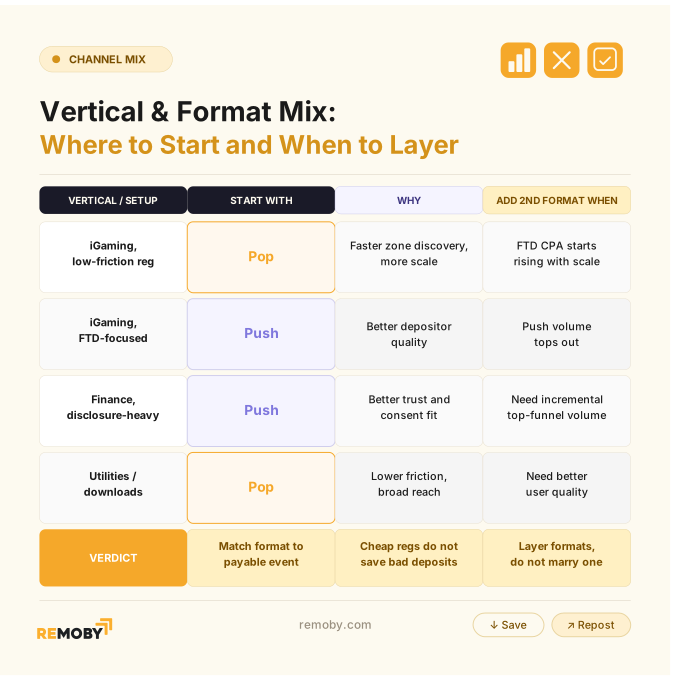
Decision matrix by vertical and funnel friction
Format choice for iGaming or finance should follow four variables: payable event, funnel friction, trust requirement, and scale ceiling. Pop usually wins when the funnel is short and discovery matters. Push usually wins when the funnel is longer, trust-sensitive, or optimized to FTD or qualified lead. Example: iGaming registration tests can start on pop; finance lead quality tests usually start on push.
Pre-lander and landing page strategy by format
Pre-lander strategy should be different for pop and push because the click arrives at a different temperature. Pop usually needs a faster trust bridge, cleaner CTA, and less copy before the offer. Push can carry a more angle-specific message from the notification into a matching lander. Example: a pop pre-lander for casino works better when it gets to proof and CTA fast; a push pre-lander can extend the bonus angle already promised in the creative.
For pop, keep the pre-lander narrow. One promise, one action, no extra exits. For push, match the headline rhythm from creative to page. If the push says “Claim your 100% reload,” the lander should not pivot into generic brand copy.
How to test pop vs push ads
Test methodology for pop versus push should hold every variable constant except the traffic format. Use the same offer, same GEO, same device split, same pre-lander, same payable event, and same tracker setup. Example: if both campaigns optimize to verified FTD, compare them only after each reaches at least 50+ payable conversions over a 7-day minimum window.
Run it like this:
- Split budget 50/50, but judge fairness by comparable conversion volume, not equal spend.
- Keep bid cap logic stable inside each format.
- Use the same blacklist rules and postback checks in Voluum or Binom.
- Compare FTD CPA, qualified lead CPA, deposit rate, LP CTR, and variance by zone.
- Ignore CTR winners that lose on the payable event.
Payable-event CPA decides the winner.
Postback clean, lander constant, GEO matched – and you still may find the “worse” traffic makes more money.
When to run both formats together
A mature account usually ends up running both. Pop handles discovery, fills the top of funnel, and finds fresh zones. Push handles efficiency, retention angles, and warmer re-engagement once the creative bundle is proven.
The switch is rarely a full switch. The pattern I have seen is sequencing and layering. Add push when pop CR is acceptable but CPA climbs during scale. Lean back on pop when push CTR decays and the subscriber base starts saturating. The tricky part however is noticing when the first one stopped being enough.
There is also a third option on the same inventory — Engagement ads: pre-qualified pop clicks billed by CPC.
Ready to launch with Remoby?
Pop vs Push ads FAQ
Pop ads are better for high-volume acquisition when the goal is reach, fast testing, and broad discovery. Pop traffic scales faster because it does not rely on subscriber lists. Push can still beat pop on CPA if the payable event is strict, but if the job is filling the top of funnel quickly, pop usually goes first.
Push traffic outperforms pop traffic on targeting precision when the offer needs warmer intent, tighter creative matching, and less cold-interrupt noise. Subscriber-based delivery filters the audience before the click. That matters more in FTD-focused iGaming, finance, and any funnel where better user quality beats raw traffic volume.
Push ads should be tested first when the iGaming offer lives or dies on FTD CPA and the funnel needs trust. Pop ads should be tested first when the main job is discovery, zone mining, and validating a low-friction registration path. The safer rule is simple: test for the payable event, not the prettiest CR.
Push ads are usually safer for finance offers because consent-based delivery creates less friction with trust, disclosure, and KYC-heavy flows. Pop can still work for top-funnel scale, but finance pages punish cold clicks harder. If the user must believe the message before converting, push starts with an advantage. The campaigns that survive this choice are usually not the ones with the cheapest clicks. They are the ones where the format matches the job. Pop finds volume, push finds efficiency, and the buyer who knows when each one is lying usually keeps the account alive.
![Pop Ads CPM in the United States [2026]](https://remoby.com/wp-content/uploads/2026/07/Screenshot-2026-07-28-at-11.23.44-768x399.png)
![Pop Ads CPM in Brazil [2026]](https://remoby.com/wp-content/uploads/2026/08/Screenshot-2026-08-03-at-15.12.01-768x431.png)
![Pop Ads CPM in Indonesia [2026]](https://remoby.com/wp-content/uploads/2026/08/Screenshot-2026-08-03-at-16.38.38-768x431.png)