Updated: July 28, 2026
|
12 min read
Updated: July 28, 2026
|
12 min read
How Affiliate Marketing Works: From Click to Commission

The click shows up instantly. The commission doesn’t. Somewhere between the cookie, the postback, the approval window, and the payout run, the deal either holds or breaks.
How affiliate marketing works is not “link in, money out.” It is a tracked transaction with rules, attribution, validation, and payout timing layered on top of one another.
What affiliate marketing is in plain terms
Most people describe the channel too early from the affiliate side. The useful way to see it is as a commercial agreement: one party brings traffic, another owns the product or offer, and payment happens only if the tracked action survives validation. To get in context of affiliate marketing trends this year, see affiliate marketing statistics 2026.
What happens when someone buys through an affiliate link
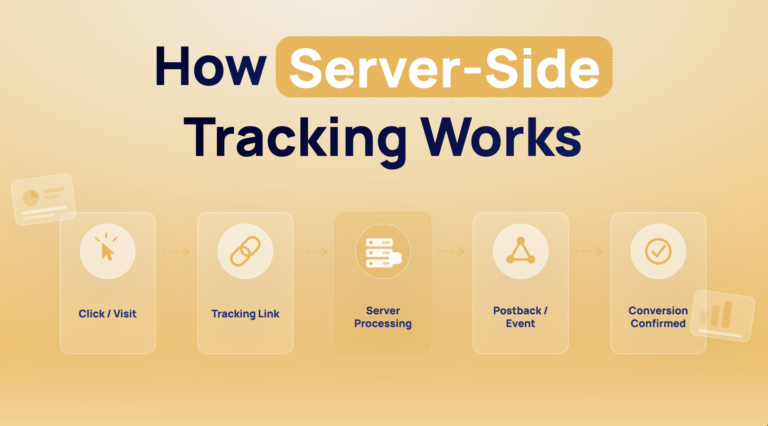
If you send traffic from a lander to an offer, four things happen in order: the click gets tagged, the session gets attributed, the conversion gets checked, and only then does the payout become payable. That last step is where beginners lose the thread.
A tracked sale can still fail the commercial rules. Refunds, KYC failure in iGaming, duplicate orders, invalid leads, or a broken cookie window can all turn a visible conversion into zero commission. (operators know this — most affiliates never ask)
The dashboard says conversion. Is it actually payable? Which variable actually moves the margin? Did the click win attribution or only record activity?
The link is live. The sale is real. The part that decides earnings happens after the user has already converted.
Ready to launch with Remoby?
Who is involved in one affiliate sale?
Affiliate marketing roles split into acquisition, ownership, tracking, and payment. The affiliate sends traffic, the merchant owns the product and the conversion rules, the network or software handles tracking and often reporting, and the customer completes the action. For example, a MaxBounty affiliate drives traffic, a merchant receives the lead, the platform records it, and payout depends on approval.
How to pick that middleman for your traffic type: CPA affiliate networks.
Affiliate vs merchant vs network or software: who does what
What most affiliates assume is that the network always controls the whole flow. In reality, it depends on setup. In a network-managed deal, the network often issues links, tracks clicks, mediates disputes, and pays on schedule. In an in-house setup using Tune, Everflow, or Cake, the merchant often controls tracking rules and payout release directly.
Role-by-role matrix: link creation, tracking, validation, and payout responsibilities
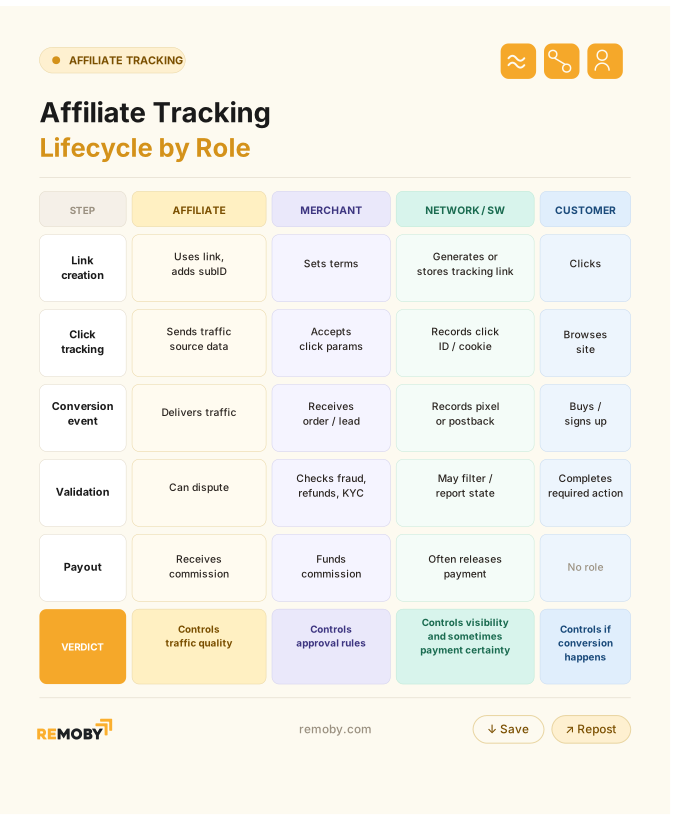
If you don’t know who controls validation, you don’t know where the payout risk sits.
How does affiliate marketing work step by step?
Affiliate marketing workflow runs in six stages: the merchant sets rules and tracking, the affiliate gets a unique link, the customer clicks, the target action happens, tracking matches that action to the click, and the commission moves through approval before payout. Example: click on Monday, sale on Tuesday, approval after the refund window, payout on the next billing cycle.
Step 1: The merchant sets up the program, rules, and tracking
A bad setup breaks the economics before traffic starts. The merchant defines the payout, cookie window, attribution model, prohibited sources, hold period, and tracking method. If those rules are vague, EPC looks better than the real payable number. In network-managed programs, that structure is often standardized; in-house, it varies much more.
Step 2: The affiliate gets a unique tracking link
The link is the control point. It usually carries affiliate ID plus subID parameters so the buyer can trace source, zone, creative, or GEO later. Without that, you can see spend in Voluum or Binom and conversions in the network, but not which placement actually produced approved volume.
Step 3: The customer clicks and a trackable session starts
If you run Safari or iOS-heavy traffic, cookie-based attribution is weaker than many offer cards imply because Intelligent Tracking Prevention cuts browser persistence (Apple WebKit). That matters more for long cookie windows than for same-session CPA flows.
Step 4: The customer completes the target action or purchase
The action that matters depends on the deal structure. CPS needs a sale. CPL needs a valid lead. CPA needs the exact event named in the terms. In iGaming, registration alone often doesn’t count; deposit, qualification, or passed verification may be the real trigger.
Step 5: The conversion is tracked, checked, and matched to an affiliate
Postback usually holds up better than a browser pixel in performance verticals because the merchant server sends the conversion directly with the click ID attached. This is one of the clearest examples of postback tracking vs cookie tracking differences in practice. Cookie-only flows are easier to launch, but easier to lose through browser limits, blockers, or overwritten attribution.
I’ve seen rev share deals collapse because nobody pulled day-60 retention before signing. The same blindness shows up here in smaller form: teams celebrate tracked conversions before checking what percentage clears validation.
Step 6: The commission moves through status changes before payout
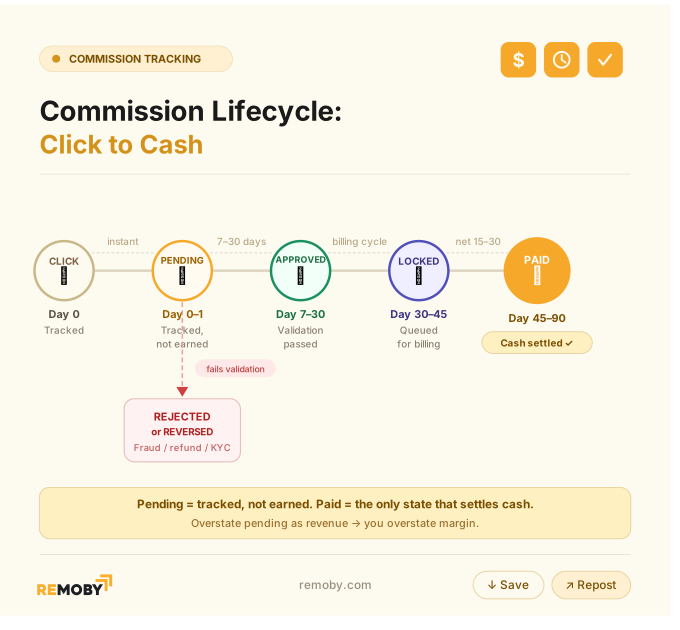
Commission states usually follow this pattern: Pending → Approved/Confirmed → Rejected/Reversed → Locked/Pending Payout → Paid. Pending starts when the pixel or postback fires. Approved comes after checks. Locked means the billing cycle has closed. Paid means funds were actually sent.
If a customer clicks an affiliate link, what has to happen before the affiliate actually earns a commission?
A click is only the first recorded event. The user still has to complete the required action inside the attribution window, tracking has to match the conversion to the affiliate, the merchant or network has to validate it against fraud, returns, duplicates, or KYC rules, and the conversion has to clear the hold period before payout release.
The click is cheap to count. The approved commission is the number that matters.
One affiliate marketing transaction from click to payout in simple terms
Affiliate transaction example looks like this: an affiliate places a tracked link, a customer clicks, the merchant records a sale or lead, the conversion enters pending, the program validates it during a hold period, and payment releases on the next payout cycle. A simple example: a $100 sale with a 10% CPS rate becomes a $10 commission only after approval, not at checkout.
Annotated example: click, sale, validation, hold period, and payout release
Here is the clean version. An affiliate promotes a Shopify merchant through Impact. The user clicks on June 1, buys on June 2, and the sale records as pending at $12 commission. The merchant allows a 30-day return window. On July 3, no refund appears, so the commission becomes approved. On the next payment run, it moves to paid.
In tougher verticals, the same path is much less clean. Approval rates in ecommerce often run around 85-92%, while aggressive iGaming campaigns can fall to 60% approved volume, with holding periods commonly 14-60 days.
The example looks simple because the dispute never arrived. In live traffic, attribution conflict is where the clean path bends.
What do affiliate links, cookies, and attribution do in affiliate marketing?
Affiliate tracking components identify the referrer, preserve the click record, and decide who gets credit for the conversion. The link passes IDs, cookies or click IDs preserve attribution data, pixels or postbacks report the conversion, and attribution rules assign the payout. Have a look: two affiliates touch the same user, but the last eligible click inside the window gets paid.
How affiliate links pass IDs and identify the referring partner
Affiliate links are less about destination and more about identification. The URL usually includes affiliate ID plus subID fields, which let the program know not only who sent the user, but which zone, prelander, or creative did it.
How cookies, click IDs, pixels, and postbacks work together
What goes wrong here is silent failure. The click records, but the browser drops the cookie; or the cookie exists, but the confirmation pixel never loads; or the postback fires without the right click ID. That is how a funnel can show CR while payable volume stays weak. (the math changes here)
The full mechanics – click IDs, pixel vs S2S, deduplication – are in affiliate tracking software blog.
What is an attribution window in affiliate marketing, and why does it affect who gets paid?
Attribution window is the time limit during which a conversion can still be credited to a prior affiliate click. A 7-day cookie window pays only if the user converts within seven days; a 30-day window keeps the claim longer. So, if the user buys on day 10, a 7-day window loses credit while a 30-day window keeps it.
Ready to launch with Remoby?
How credit is assigned when there are multiple clicks or channels
Last-click attribution is common, but not universal. If a user clicks Affiliate A, then a coupon site, then a paid search ad, the program rules decide which touchpoint wins. Some merchants devalue coupon interactions, some overwrite everything with the latest click, and some exclude branded search entirely.
Attribution looks mechanical until two channels claim the same sale. Then the real policy shows up.
How do affiliate marketers get paid?
Affiliate payout models pay on different conversion events and release funds only after approval conditions are met. CPA pays on a defined action, CPL on a valid lead, CPS on a sale, and revshare on downstream customer revenue. A CPL lead can track today, sit pending for compliance review, and pay next month if it stays valid.
CPA, CPS, CPL, and revenue share: what event triggers commission
The model you choose decides where the risk sits. CPA moves more risk to the merchant because payment is flat once the event qualifies. CPS ties payout to a sale amount. CPL pays only if the lead meets quality rules. Revshare can out-earn everything else, but only if retention and monetization hold. A quick breakdown of affiliate commission models like CPA, CPS, and CPL helps clarify why the trigger event changes the payout risk.
The traffic side of that equation – break-even CPA by payout level – is in pop traffic for affiliate marketing blog.
Commission states and payout timing: Pending, Approved, Rejected, Locked, and Paid
If you see “pending” and think revenue, you will overstate margin. Pending means tracked, not earned. Approved means validation passed. Rejected or reversed means it failed later. Locked means it is queued for billing. Paid is the only state that actually settles cash.
Minimum thresholds, hold periods, and payment schedules
Payment timing is a cash-flow question, not a reporting question. Many programs hold for 14-60 days, then pay on weekly, biweekly, or Net-30 schedules. Some in-house programs pay more per conversion but have worse reliability; affiliates have waited 90+ days during merchant cash crunches.
Higher payout on the card does not help if the money lands two months late — or not at all.
Why would an affiliate conversion track but still not become a payable commission?
Tracked conversions become non-payable when the platform records the event but later validation fails or the payout conditions are not met. Common reasons include refunds, cancellations, duplicate orders, fraud flags, invalid leads, KYC failure, or attribution loss. Great example is when a user deposits on an iGaming offer, fails verification, and the commission reverses before payout.
Common reasons: returns, cancellations, duplicate orders, fraud checks, and invalid leads
Most lost commissions are not tracking bugs. They are rule failures. In ecommerce that often means returns. In lead gen, bad phone numbers or incentivized submissions. In iGaming, chargebacks, duplicate accounts, or failed verification.
Why commissions stay pending, get rejected, reverse, or never reach payout
The dangerous part is delay. A conversion can sit pending for weeks, look healthy in the dashboard, and then reverse when the hold closes. Chargebacks and refunds can remove 5-15% of approved conversions in iGaming and Finance flows during the window. Programs that explain affiliate commission reversals and action locking make this risk much easier to spot before you scale.
Another reason is failed conversion due to wrong tracking setup. Validate your postback URL setup before blaming the offer.
When payable volume falls short, the first question is not “did tracking break?”. It is “which validation rule did the traffic fail?”
How does tracking work differently in a network-managed affiliate program VS an in-house program?
Network-managed vs in-house tracking differs mainly in who controls validation, support, and payment. Networks usually sit between affiliate and merchant, standardize tracking, add fraud review, and often pay affiliates on schedule even before collecting from the advertiser. In-house programs track directly through merchant software, give more control and sometimes higher payouts, but shift payout risk back to the merchant relationship.
Operational differences in tracking, validation, support, and payout flow
If you want cleaner support and payment certainty, networks usually win. If you want higher payouts and can underwrite more risk, in-house often pays better. That is why a network that fits CPA-first Tier-2 strategy, such as Remoby (push and pop network with direct publisher relationships in Tier-2 and Tier-3 GEOs), makes more sense for buyers who prioritize payout certainty over squeezing the last dollar from direct terms.
Comparison table: network-managed vs in-house affiliate programs
| Factor | Network-managed | In-house |
|---|---|---|
| Tracking setup | Standardized links and reporting | Merchant-specific setup |
| Validation | Network + merchant layers | Merchant only |
| Support | Account manager in the middle | Direct merchant team |
| Payout reliability | Usually stronger | Depends on merchant cash flow |
| Payout size | Often lower | Often higher |
| Disputes | Routed through network | Direct negotiation |
| Verdict | Better if stability matters | Better if you trust the operator and can absorb delays |
FTC disclosure basics for affiliate marketing
If you publish affiliate content, disclosure is not optional. The Federal Trade Commission requires clear disclosure when compensation can affect endorsement or recommendation. The FTC’s Endorsement Guides: What People Are Asking is the practical source most affiliates should read before publishing.
Burying disclosure in the footer is the failure mode. Put it close to the affiliate link or endorsement, in language an ordinary reader can notice and understand. Social posts need it in-post; long-form content needs it before or near the monetized recommendation.
Ready to launch with Remoby?
FAQ for how affiliate marketing works
Read the questions to find out top 3 queries from affiliate marketing beginners
Tracked sale does not guarantee payment. A tracked sale still has to survive returns, fraud checks, attribution rules, and the hold period. Only approved and then paid status settles the commission.
Affiliate commission timing usually runs from two weeks to two months, depending on the hold period and billing schedule. Retail programs often clear faster than finance or iGaming, where validation is heavier.
Last-click credit can be overwritten if the program uses a later eligible touchpoint, excludes certain channels, or applies different attribution rules to coupons, branded search, or internal promos. The answer depends on the program terms, not the affiliate's assumption.

![Best GEOs for Affiliate & Betting Campaigns [2026]: Score Markets by Regulation, Payout & Fit](https://remoby.com/wp-content/uploads/2026/03/Best-GEOs-for-Betting-Campaigns-768x432.jpg)